
The Challenge
AsBuilt’s partner, Acensium, was contracted to provide design engineering and fabrication support for modifications to a section of a client’s Material Transfer System. The primary objective was to reduce material breakage occurring during processing at a critical transfer point.
The affected section spanned from the outlet of a bucket elevator, through a hopper system, and onto a belt dryer feed point. Excessive drop heights, impact forces, and inefficient flow transitions were contributing to product degradation and reduced process efficiency.
Key project requirements included:
- Accurate documentation of existing structural and mechanical conditions
- Identification of impact zones contributing to material breakage
- Redesign of transfer geometry to improve flow characteristics
- Seamless integration with existing equipment
- Support for fabrication and installation
Legacy documentation did not reflect current site conditions, making high-accuracy as-built data essential for reliable design development.
The Solution
Laser Scanning & As-Built Modeling
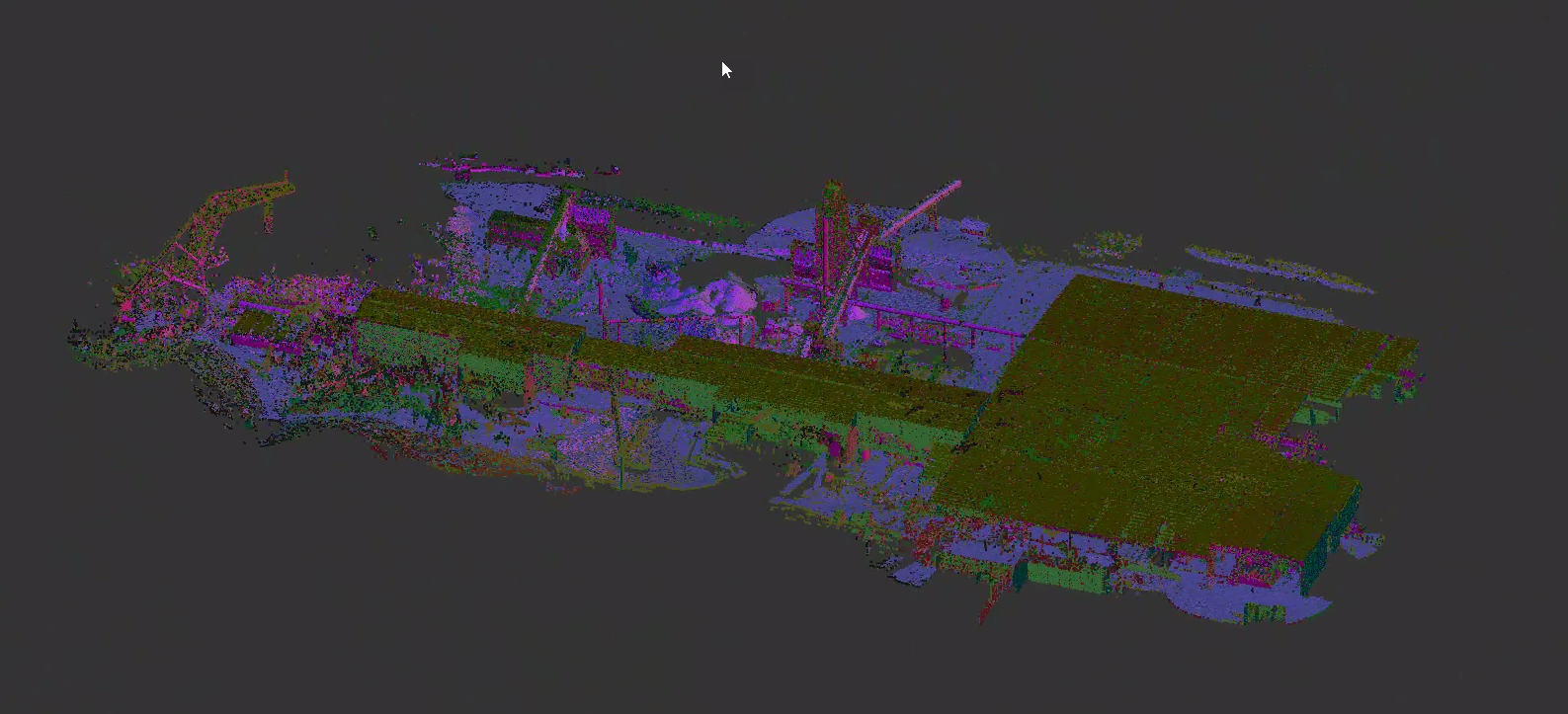
AsBuilt conducted a high-resolution terrestrial laser scan (LiDAR) of the material transfer area, capturing:
- Structural steel and support framing
- Bucket elevator discharge configuration
- Hopper geometry and chute transitions
- Belt dryer feed interface
- Surrounding utilities and spatial constraints
The scan data was registered and processed into a precise point cloud, which served as the foundation for a detailed 3D as-built model.
Engineering Design & Optimization
Using the verified 3D scan data, along with 2D drawings and client specifications, Acensium developed a modified transfer system design covering the complete material flow path:
- Bucket elevator discharge
- Hopper transition geometry
- Controlled material flow to the belt dryer
Engineering efforts focused on:
- Reducing drop height and impact velocity
- Optimizing chute angles and flow paths
- Minimizing material turbulence and degradation
- Ensuring structural compatibility and constructability
- Supporting fabrication detailing
Material testing was incorporated to validate performance assumptions and ensure the modified system achieved the targeted reduction in breakage.
Deliverables
- Raw laser scan data
- Post-processed, registered point cloud
- Photorealistic 3D visualization
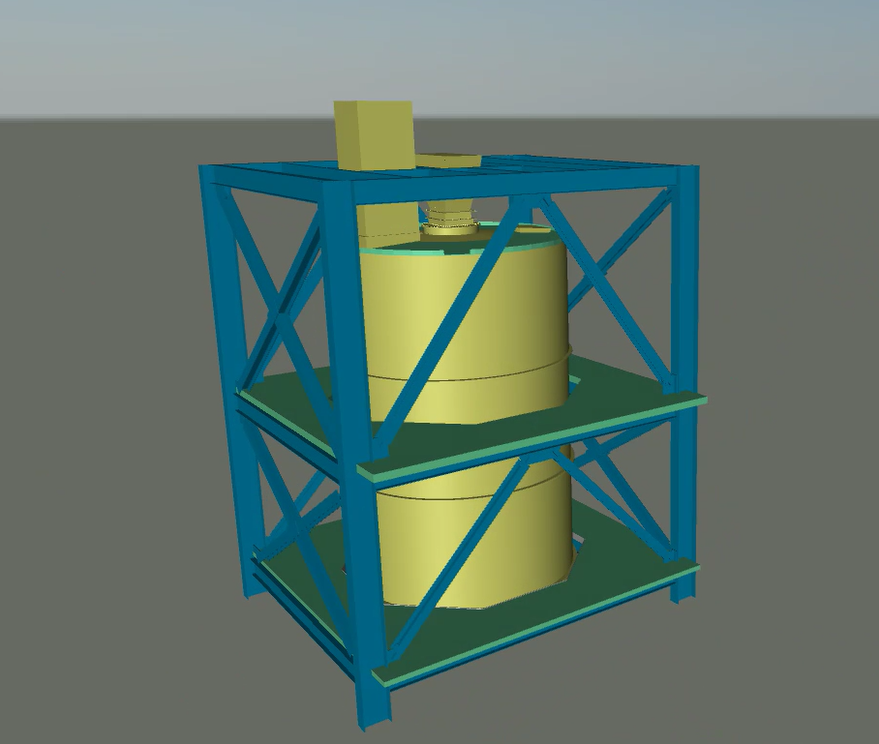
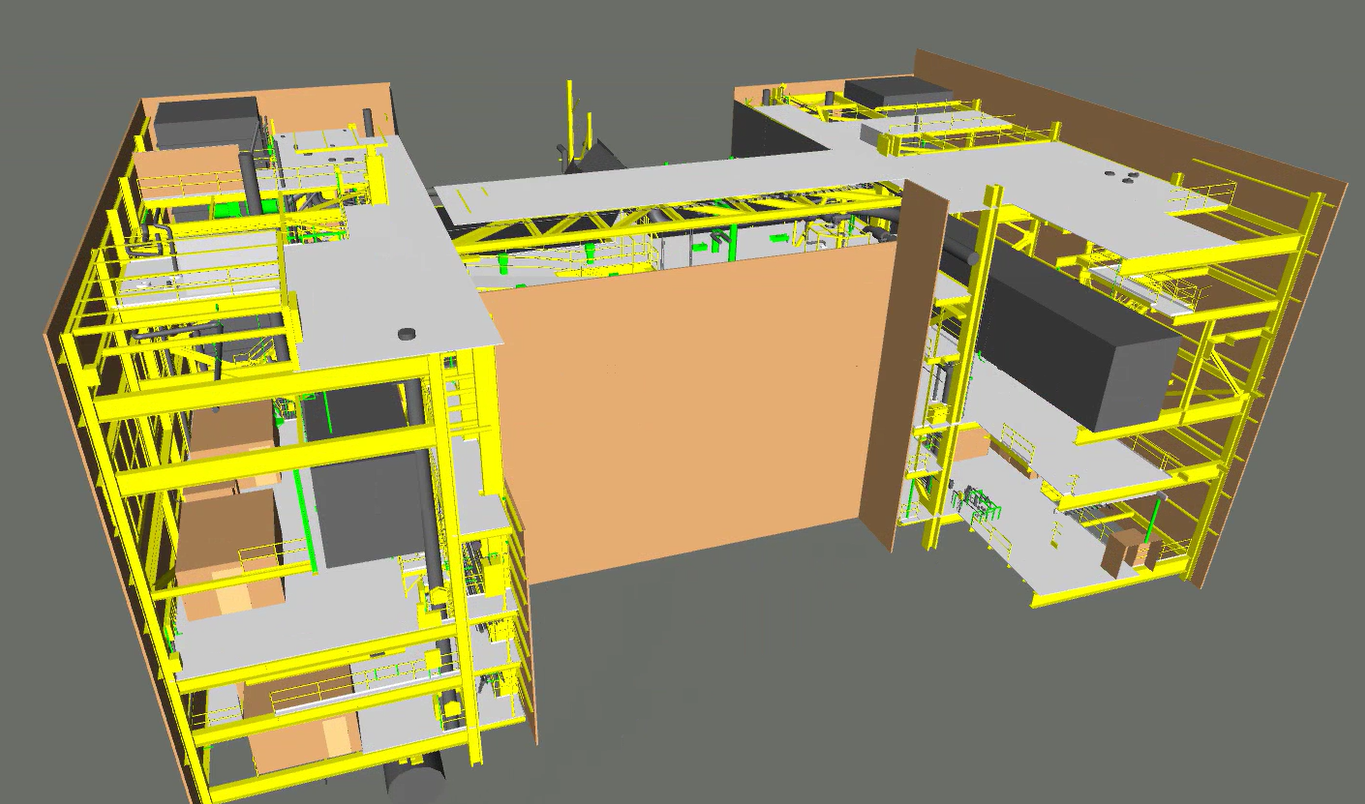
- 3D as-built model
- Material testing results
- Design engineering package
- Fabrication support documentation
Results & Impact
By combining laser scanning, 3D modeling, material testing, and targeted engineering modifications, the project delivered a redesigned transfer system that improved material handling efficiency and reduced product breakage. The data-driven approach minimized fabrication risk and ensured accurate integration within the existing facility.