Construction leaders usually do not struggle to understand what 3D scanning and BIM coordination do. The real question is whether the investment pays off.
In most projects, budget overruns are not caused by one dramatic mistake. They come from compounding inefficiencies like incomplete existing conditions, design conflicts discovered too late, trade rework, unclear installation documents, and problems that are not caught until they affect multiple downstream activities.
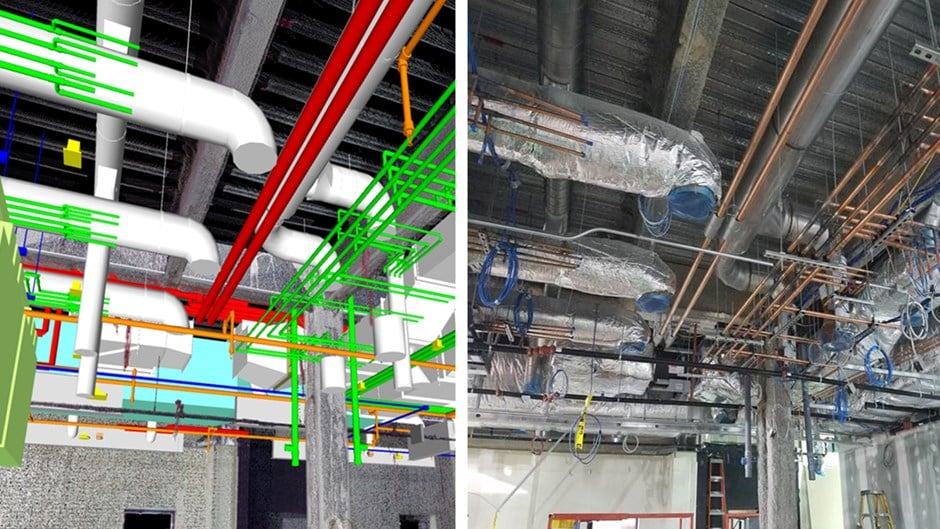
That is where an integrated workflow becomes valuable. When a project starts with accurate 3D scanning of existing conditions, continues with precise 3D modeling of existing and proposed work, moves through BIM coordination for MEPFP systems, produces coordinated shop drawings for the field, and includes construction verification during installation, the result is not just a better model. It is a more predictable and profitable project.
This framework helps decision makers evaluate the return on investment and apply the same logic to future projects.
Before calculating ROI, it helps to understand where money is typically lost during design and construction.
Renovation and retrofit work is especially vulnerable to surprises in the field. Old drawings are often incomplete or inaccurate, building elements may not match the record documents, and hidden deviations can force redesign or field modifications.
When teams build from assumptions instead of accurate conditions, the risk shows up later as RFIs, change orders, schedule delays, and avoidable labor costs.
MEPFP trades often compete for the same space. Without coordination, conflicts between ductwork, piping, conduit, structure, framing, and equipment are pushed into the field, where they are much more expensive to resolve.
A single clash can trigger a chain reaction. One trade moves its work, which impacts another trade, which changes access, sequencing, and sometimes even procurement.
Even when the design is mostly correct, unclear or incomplete shop drawings can lead to costly interpretation in the field. Installers may have to stop and ask questions, rely on assumptions, or make judgment calls that create downstream issues.
Clean, coordinated shop drawings reduce uncertainty and help crews install with confidence.
Problems become more expensive when they are discovered late. If installed work is not checked against the model and project intent, small deviations can compound into major rework once additional systems are added on top of them.
Construction verification helps teams catch issues earlier, confirm progress, and prevent incorrect work from becoming a larger project problem.
The strongest ROI comes from looking at the full workflow, not just one service in isolation.
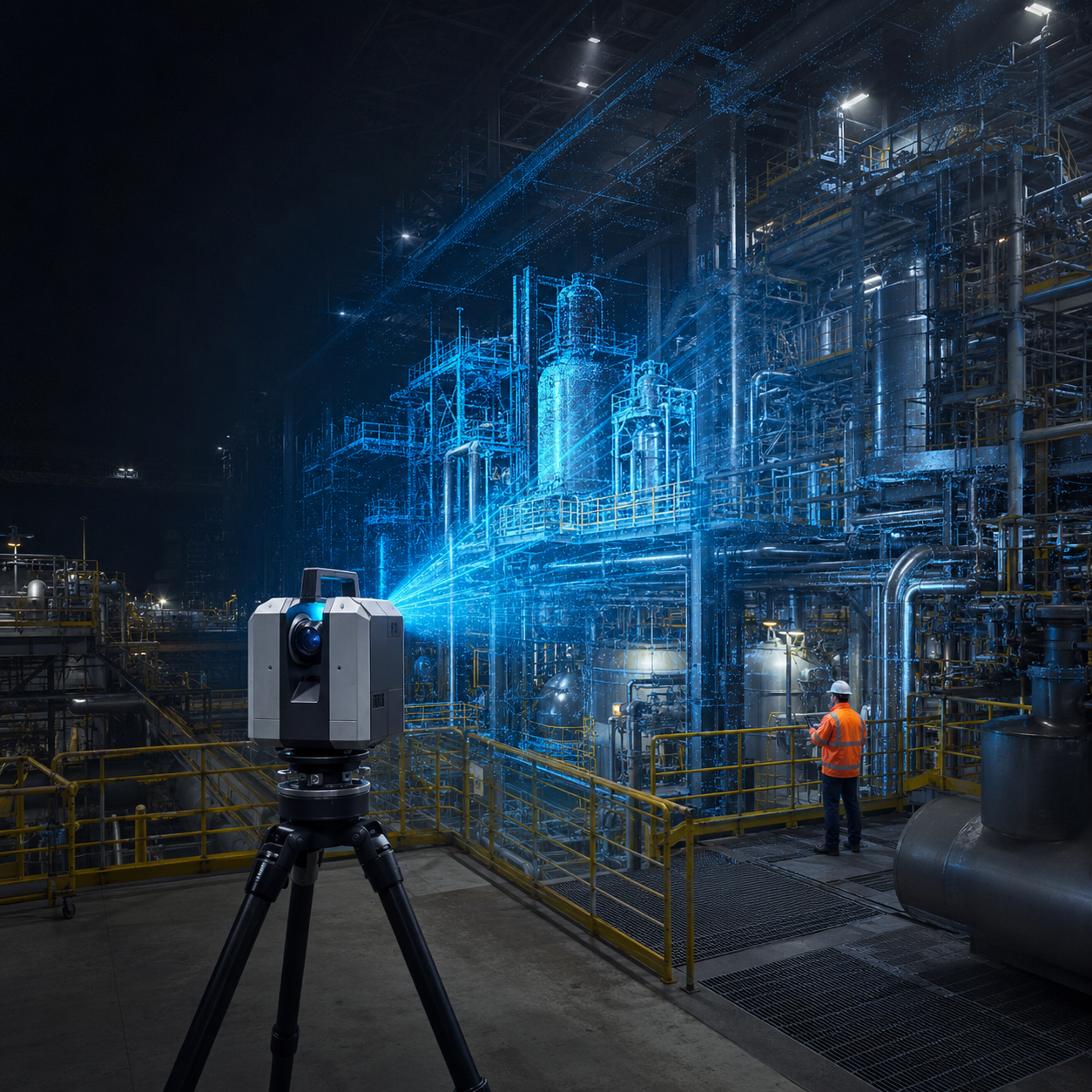
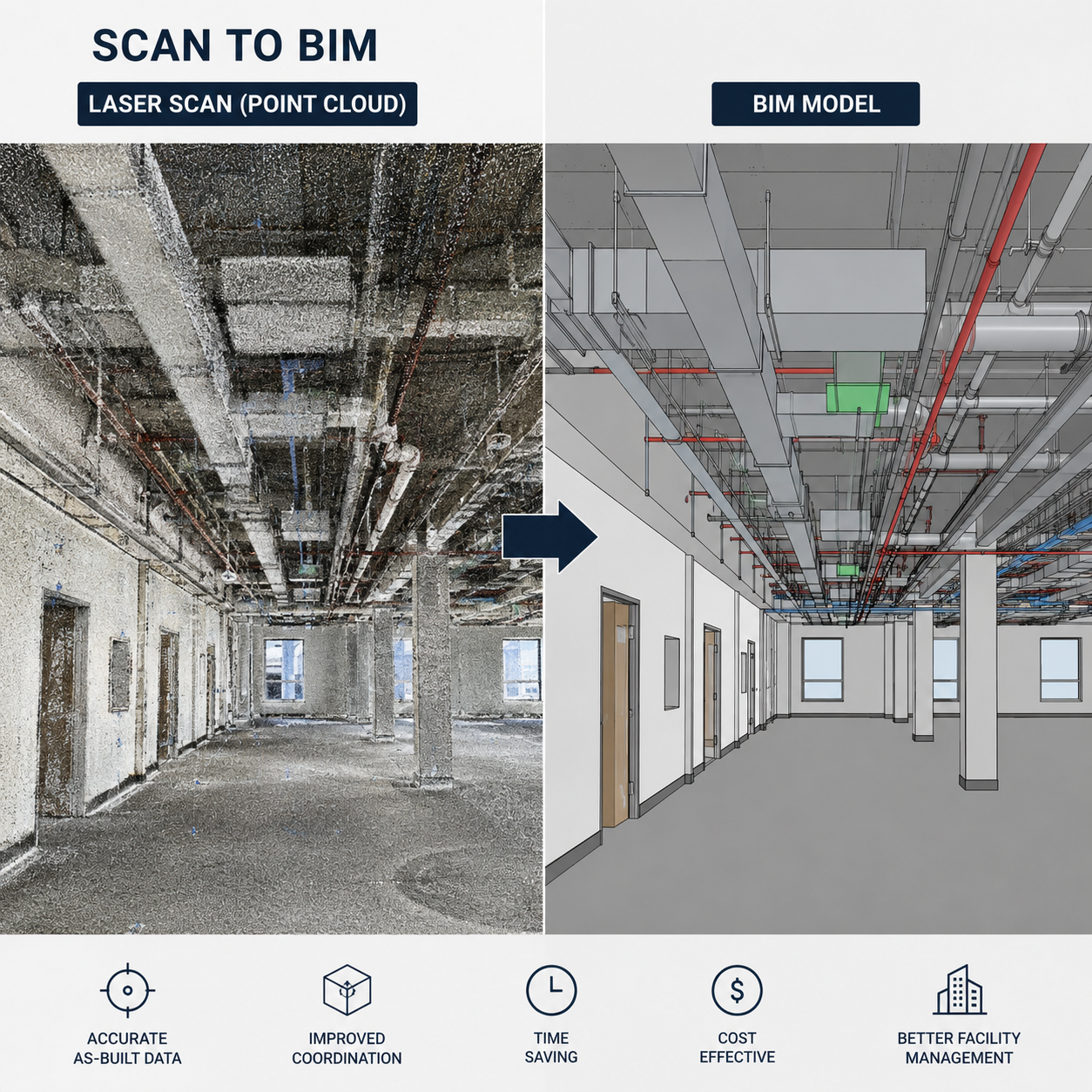
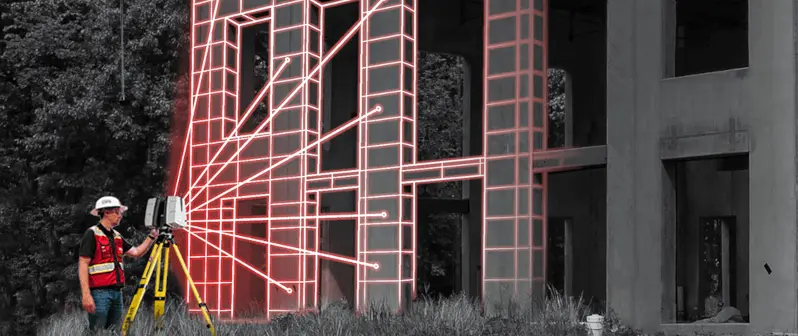
First, 3D laser scanning captures the real existing conditions. Next, 3D modeling turns those conditions and the proposed design into an accurate digital environment. BIM coordination then creates a clash-free federated model across the MEPFP trades. Coordinated shop drawings translate that work into clear instructions for fabrication and installation. Finally, construction verification confirms that the project is being built as intended and that progress in the field matches what is being reported.
Each step reduces risk on its own, but the real financial benefit comes from how the steps support one another. Accurate scan data improves modeling. Better models improve coordination. Better coordination improves shop drawings. Better shop drawings improve installation. Verification protects all of it during construction.
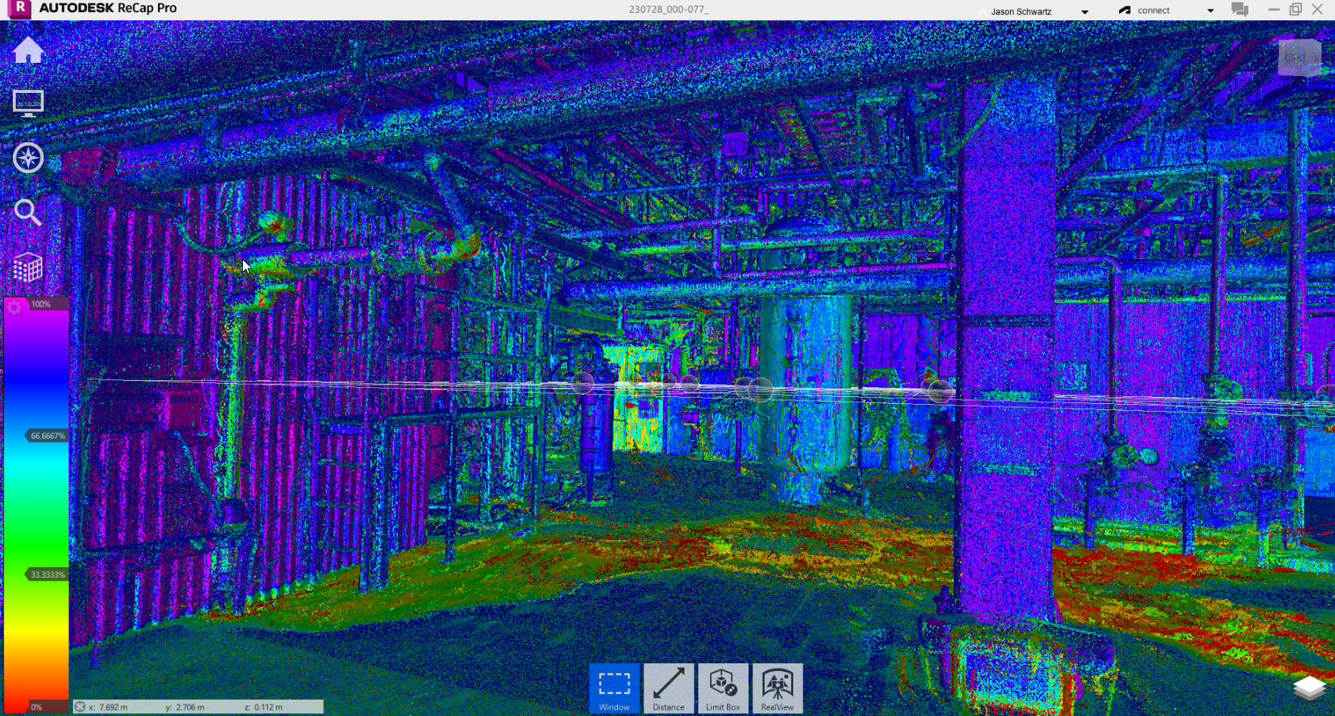
3D scanning reduces uncertainty at the start of the project. That matters because uncertainty is expensive.
When teams have reliable existing condition data, they can make better design decisions earlier. They reduce the need for assumptions, minimize design revisions, improve bidding accuracy, and lower the chance of discovering major conflicts after mobilization.
Consider a $10 million renovation project with a 5 percent contingency for unknown existing conditions. That is $500,000 set aside to cover surprises. If high-accuracy 3D scanning reduces condition-related uncertainty by even 30 percent, that represents $150,000 in avoided cost exposure.
That does not mean every dollar drops directly to the bottom line, but it does show how quickly scanning can protect budget and schedule before physical work begins.

Scanning alone provides raw data. Modeling turns that data into a usable decision-making tool.
When the existing conditions model and the proposed construction model are both accurate, project teams can evaluate fit, sequence, access, and constructability much earlier. This improves design alignment, stakeholder communication, and confidence in the execution plan.
For owners and project managers, this means fewer revisions, fewer late-stage surprises, and better control over scope. For trades, it means better visibility into what will actually be built.
On a $10 million project, even a 1 to 2 percent improvement in design efficiency and issue prevention represents roughly $100,000 to $200,000 in value.
BIM coordination is often where the ROI becomes easiest to justify.
Without coordination, trade conflicts are discovered during installation. At that point, labor is already mobilized, materials may already be fabricated, and schedule pressure is building. Fixing the issue in the field costs more because the team is solving it at the most expensive stage possible.
With BIM coordination, trades work from a federated model that has already been reviewed for clashes, access constraints, routing conflicts, and sequencing issues. Problems are resolved digitally before crews are onsite.
Rework is one of the biggest hidden drains on construction profitability. If a project experiences rework equal to 8 percent of total cost, a $10 million project could absorb $800,000 in rework-related expense. If coordination reduces that by just 25 percent, the avoided cost is $200,000.
That is before accounting for schedule protection, labor productivity, and reduced frustration across the project team.
Shop drawings are where coordination becomes actionable for fabrication and installation.
When trades receive clear, coordinated shop drawings, they spend less time interpreting intent and more time executing the work. Installers know where systems go, how they fit, and what has already been resolved. That reduces field confusion, accelerates installation, and decreases the burden on supervisors and project managers to solve avoidable issues onsite.
On a project with a $3 million labor scope, even a 5 percent productivity improvement results in $150,000 in labor value.
Construction verification is often overlooked, but it plays a major role in protecting the value created earlier in the process.
Verification confirms that installed work matches the coordinated model and that project progress is occurring as expected. It provides another checkpoint before mistakes compound. That matters because the later a problem is found, the more expensive it is to fix.
If a system is installed incorrectly and not caught right away, surrounding work may continue based on that incorrect installation. By the time the issue is discovered, multiple trades may be affected, demolition may be required, and the schedule impact may be much larger than the original error.
Preventing just one compounded field error can easily avoid $50,000 to $250,000 in cost depending on the project.
Take a $10 million project using the full workflow:
Total estimated value: $750,000
If the total investment for scanning, modeling, coordination, shop drawings, and verification falls between $75,000 and $150,000, the return can range from 5x to 10x depending on project complexity.
ROI = (Avoided Costs + Efficiency Gains) ÷ Service Investment
Avoided costs include rework reduction, change orders avoided, redesign prevented, and schedule disruption minimized.
Efficiency gains include faster installation, fewer RFIs, improved labor productivity, better sequencing, and reduced time spent solving field conflicts.
The key is to evaluate the service as a project delivery strategy, not a line-item cost.
This approach delivers the strongest ROI on projects where complexity and risk are highest:
3D scanning, 3D modeling, BIM coordination, shop drawings, and construction verification are not just technical services. Together, they act as a financial control system for construction projects.
They reduce uncertainty, prevent rework, improve labor efficiency, protect schedules, and ensure that work is installed correctly before mistakes compound.
For decision makers, the question is not just what these services cost. The better question is how much avoidable cost they remove from the project.
Start by identifying your exposure to unknown conditions, expected rework, labor inefficiencies, and the cost of late-stage errors. Then compare those risks to the investment required to implement a full scanning, modeling, coordination, and verification workflow.
That comparison gives you a repeatable way to evaluate ROI on every project moving forward.
If you want to reduce risk before construction starts and maintain control throughout the build, AsBuilt3D can help implement this workflow from field capture to final verification.
👉 Contact our sales team to learn more!

Each project represents our commitment to accuracy and technical excellence
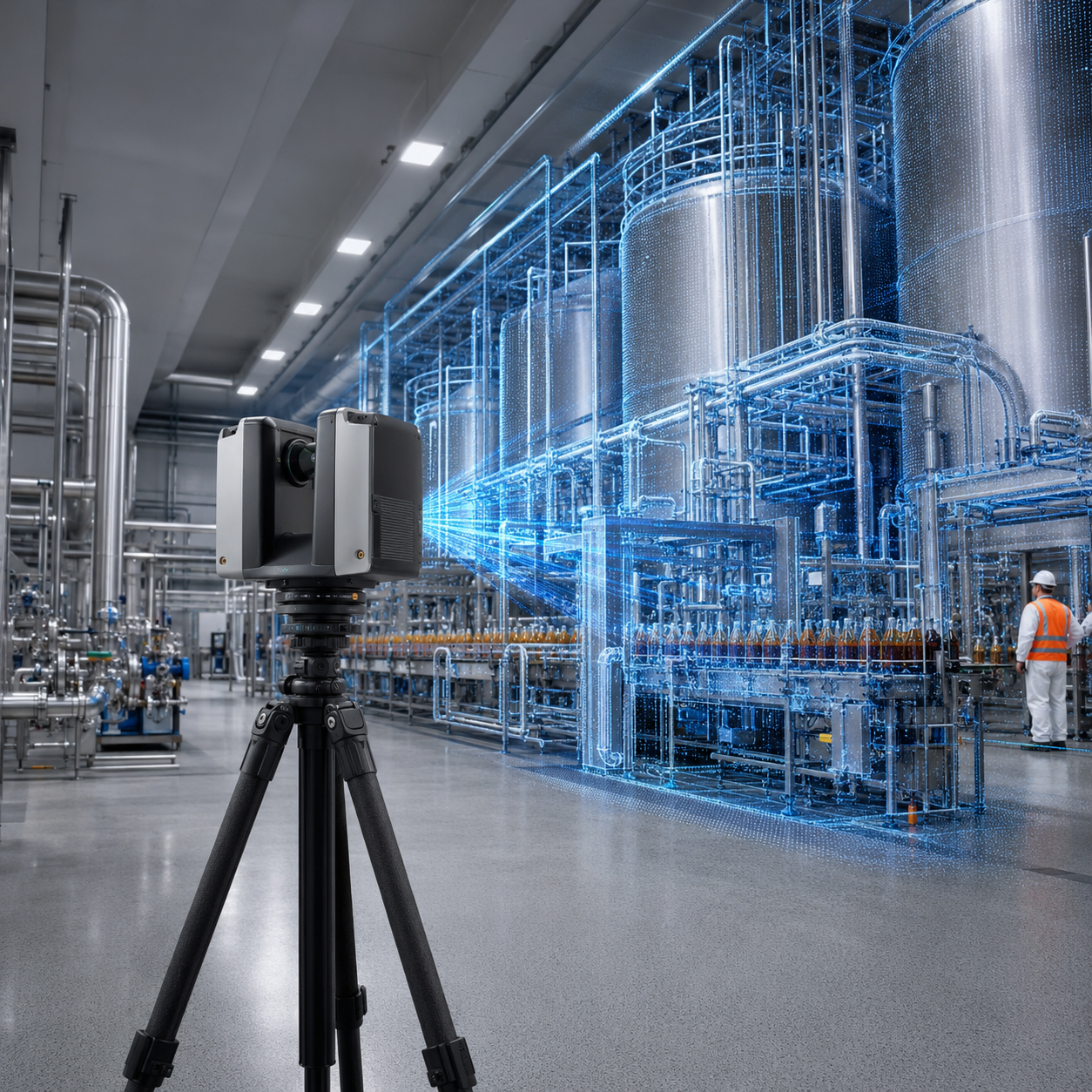


Talk with our team about your facility, scope, and objectives to determine the right capture, modeling, and analysis approach.