The Challenge
AsBuilt was engaged to provide accurate as-built documentation for two existing stations and the associated ductwork leading to a proposed new baghouse system location. The project required precise dimensional data to ensure seamless integration of the new air pollution control equipment into the existing infrastructure.
The stations and ductwork were located within a congested industrial environment containing structural steel, mechanical equipment, utilities, and elevation changes. Inaccurate or outdated drawings increased the risk of:
- Misaligned duct connections
- Structural interference
- Improper equipment placement
- Installation delays and rework
- Inefficient airflow routing
To support engineering and fabrication, verified existing-condition data was critical.
The Solution
High-Precision 3D Laser Scanning
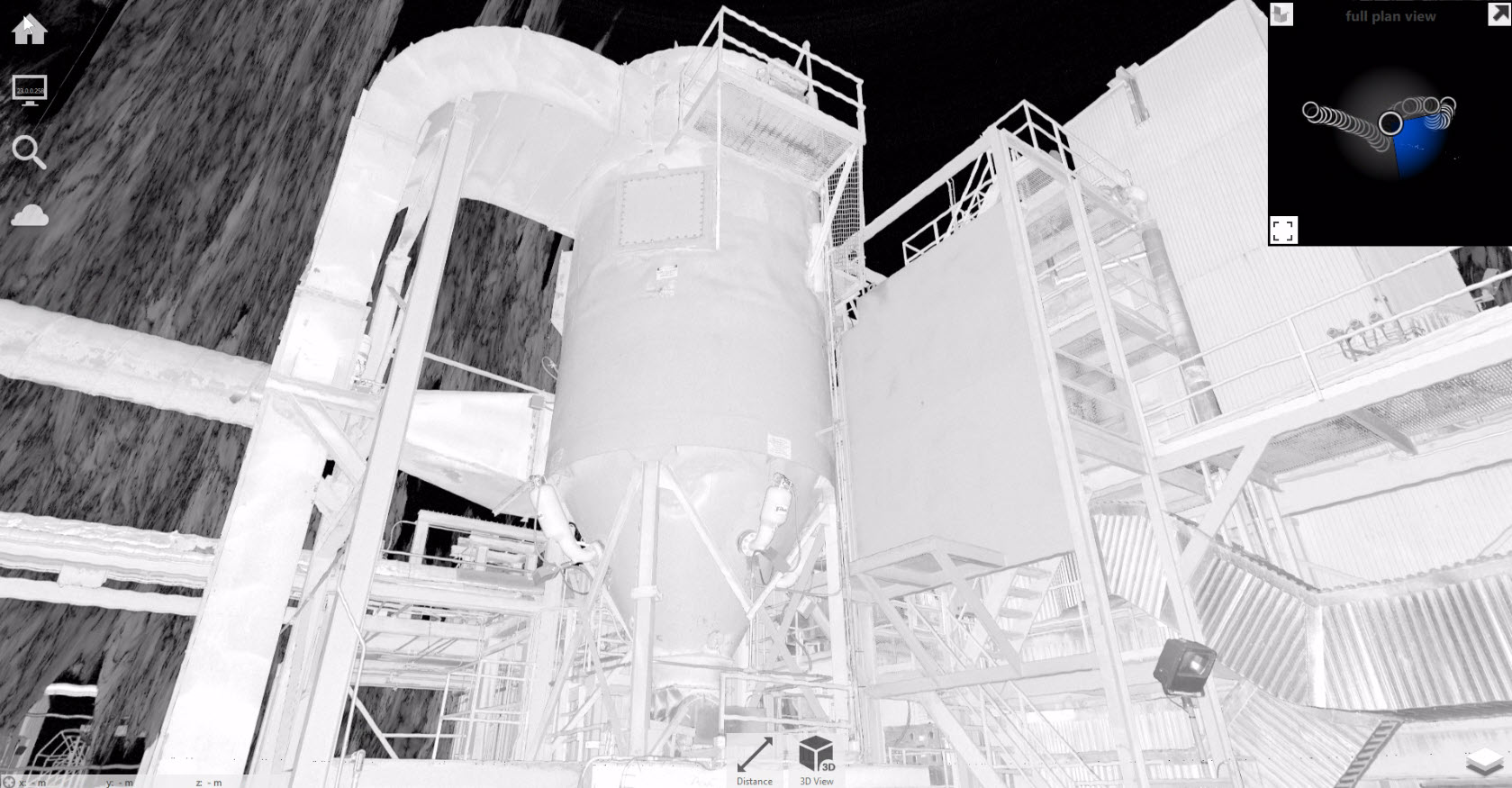
AsBuilt conducted detailed terrestrial laser scanning (LiDAR) of the two stations and the full ductwork path to the proposed baghouse location. The scan captured:
- Structural framing and supports
- Existing duct geometry and elevations
- Equipment interfaces and tie-in points
- Utilities and surrounding constraints
The data was registered and post-processed into a quality-verified point cloud, accurately representing field conditions at the time of capture.
3D As-Built Modeling
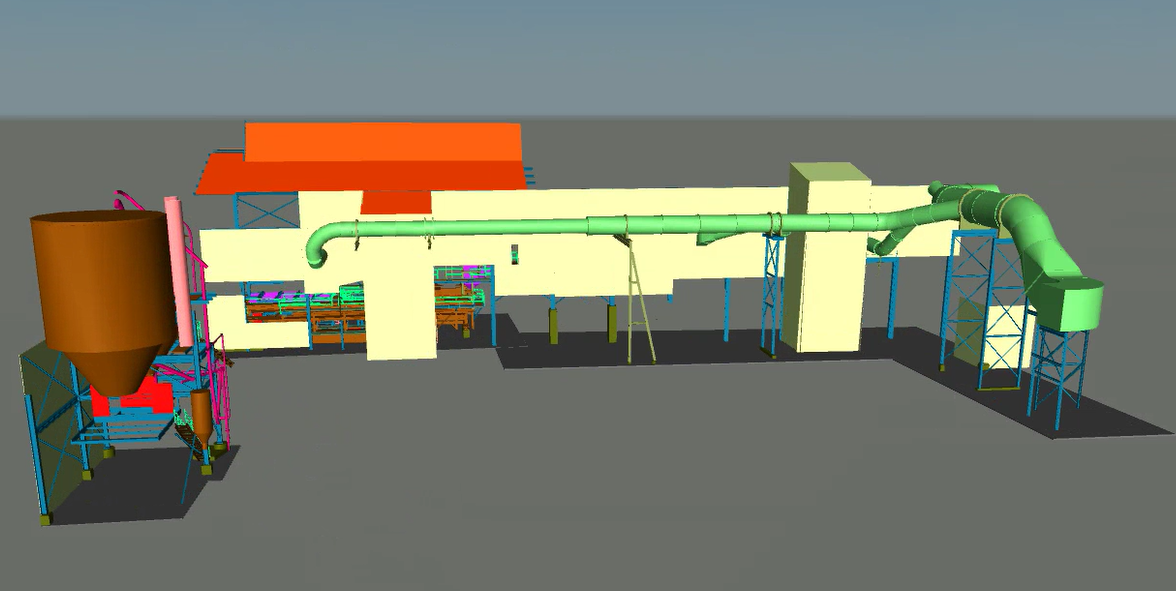
Using the processed scan data, AsBuilt developed a comprehensive 3D as-built model (DWG format) of the stations and duct systems. The model provided:
- Accurate geometry for duct routing
- Verified connection points
- Clearance and interference analysis
- Engineering-ready design backgrounds
This allowed the design team to confidently plan the new baghouse installation while minimizing integration risk.
Deliverables
- Raw laser scan data
- Post-processed, registered point cloud
- Photorealistic 3D visualization
- 3D as-built model (DWG format)
Results & Impact
The project delivered precise digital documentation to support the installation of a new baghouse system. By leveraging laser scanning and 3D modeling, AsBuilt reduced uncertainty, improved design accuracy, and helped ensure efficient integration within the existing facility.