

The retrofit is approved: a new transfer chute, a conveyor realignment, a dust collection upgrade, maybe a bunker liner. The design team asks for drawings of the transfer tower. What comes back is a set that predates at least three rounds of modifications, a structural package with a field-verify note on every sheet, and a maintenance planner who says the conduit on the third floor "isn't on anything." That is the normal starting point for a coal handling as-built survey, and it is why coal handling is usually the first place a plant with a long future should measure.
This post covers what to capture in conveyors, transfer towers and bunkers, how to plan the scan so it supports design, and what the deliverables should include before the retrofit engineering starts.
Coal handling systems take constant wear and get modified constantly. Chutes get relined or rebuilt. Skirting and belt cleaners change. Supports get added where something cracked. Fire protection, conduit and dust collection ductwork get routed wherever there was room at the time. Very little of it gets redrawn.
Kyle Cooper, president of AsBuilt and Acensium, describes what that looked like on coal handling projects before scanning became the first step:
"And every single time we went into a project, it was… we had those ohs and those gotchas and… we wish we took better measurements or we're going back out the site to do something."
Jason Adkins, AsBuilt co-founder, is blunter about the consequence. On material handling jobs, "one or two little mistakes… I did this job for free because of one or two little things… And so that's why we started doing this." A missed fire line or a conduit run in a classified area is enough to turn a well-bid job into a loss.
The same pattern shows up well beyond coal handling. After a coal handling presentation, a plant manager told Jason about replacement piping that corporate engineering had designed. As Jason recalls it: "She said it ran into cable trays, it ran into structural steel, it ran into piping… She said three and a half million dollars of rework." Every one of those interferences was there to be measured before the design started.
Scope depends on the retrofit, but these are the elements that most often drive design and installation in coal handling areas.
The rule for scope is simple: capture every system the new work has to connect to, route through, hang from or fit around, including the ones no one listed because they aren't on the drawings.
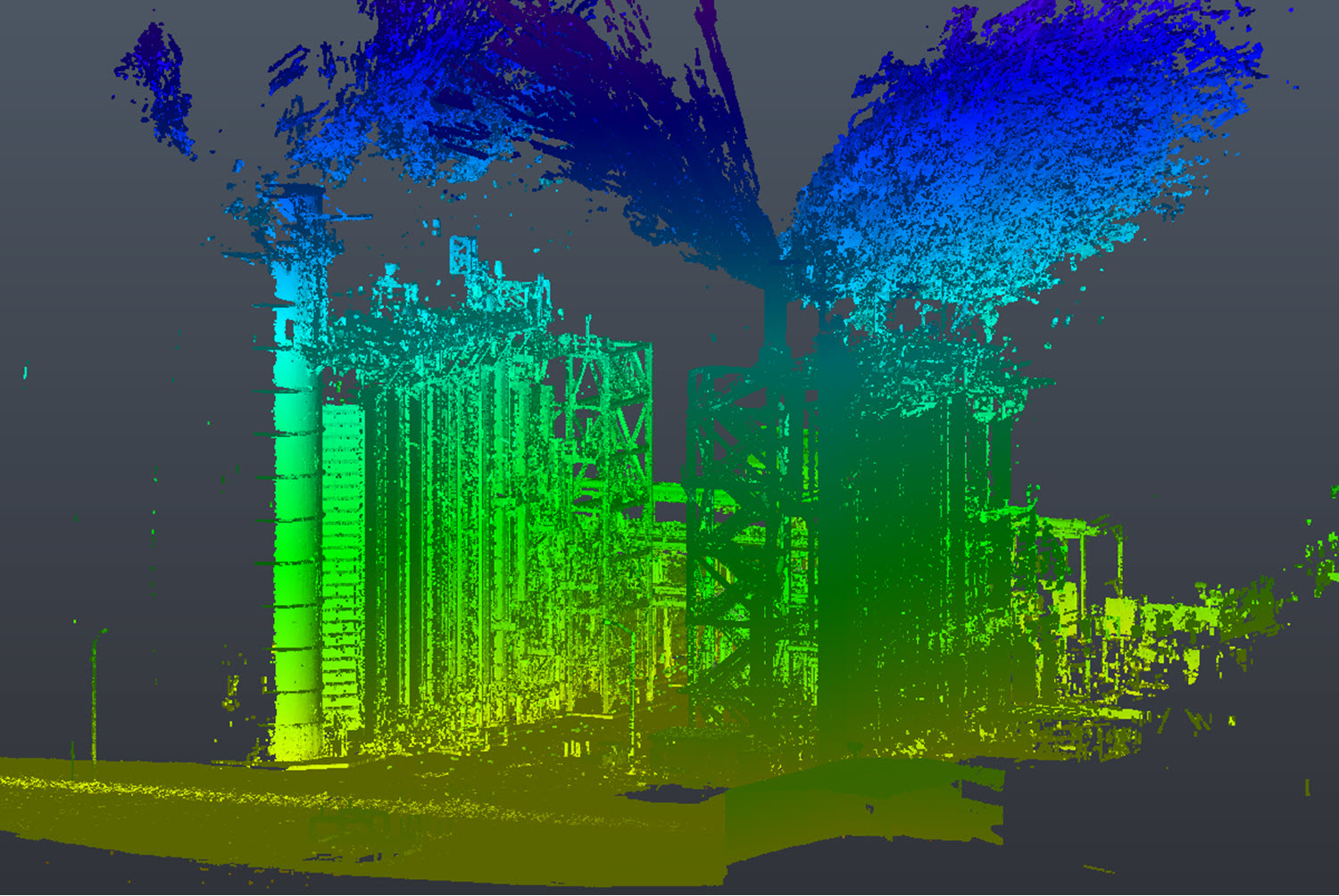
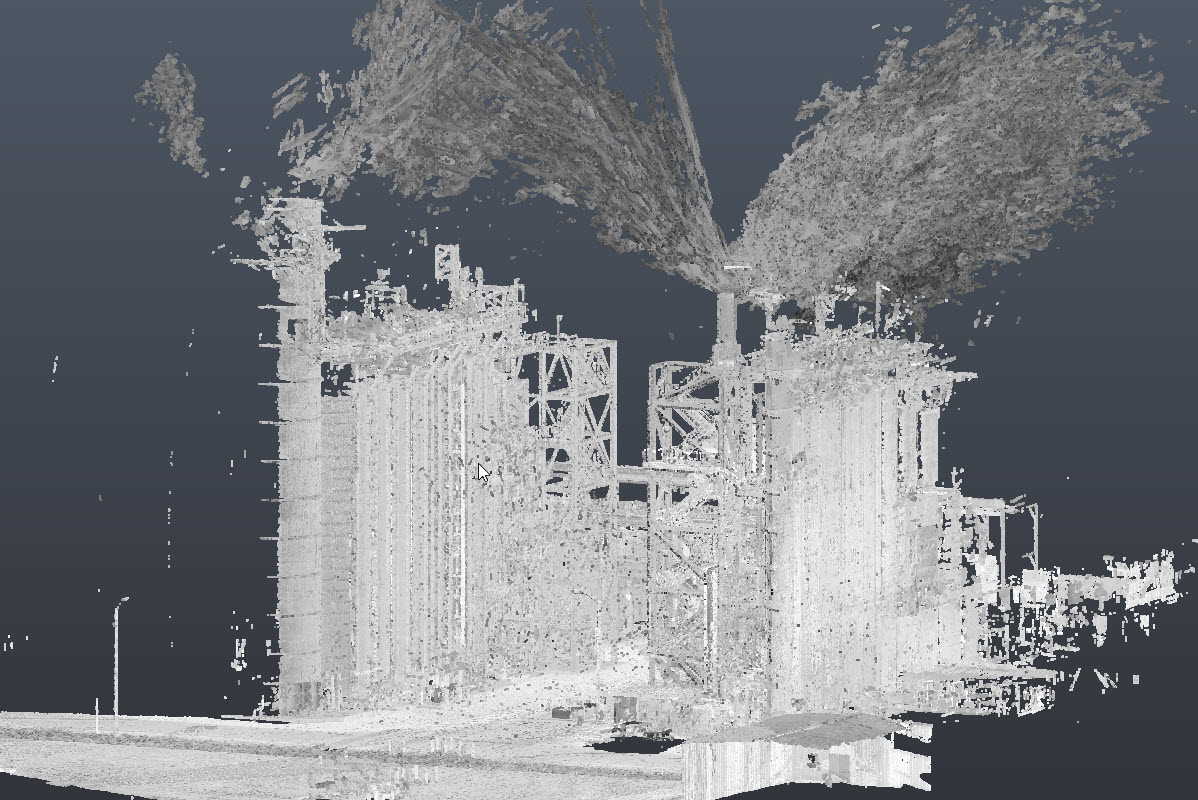
A scan that is fine for a walkthrough can be too thin to design from. An OEM design engineer reviewing a model at a coal plant ran into exactly this when routing new piping at elevation through an area where the existing scan data was sparse:
"there's not a whole lot of point clouds, at least not enough that I feel comfortable with this routing."
That is the right call from the designer, and it is a scoping problem, not a design problem. Before the scan, identify where new routing, new steel or new equipment is likely to go, and plan denser positions there, including at elevation and above obstructions. Transfer towers are especially prone to shadowing: chutes, beams and equipment block line of sight, so coverage has to be built floor by floor and from multiple angles.
Accuracy and level of detail should be set the same way, by area and by use. A chute tie-in needs more than a gallery clearance check. Our post on as-built model accuracy, LOD and tolerance covers how to specify it.
The same OEM designer asked that future scans come in the plant's own coordinate system:
"It helps to have the laser scans to agree with the plan coordinates. That way, everything kind of locks into the same coordinates instead of having to move, maneuver them in NavisWorks."
Specify it up front. When the point cloud is registered to plant northing, easting and elevation, it lines up with the plant's existing models, with the OEM's design and with every later scan. Nobody spends hours nudging data into place, and the next project in the same area starts from a data set that already fits.
Coal handling often runs whenever the unit runs, so scheduling a coal handling as-built survey usually takes a mix of approaches:
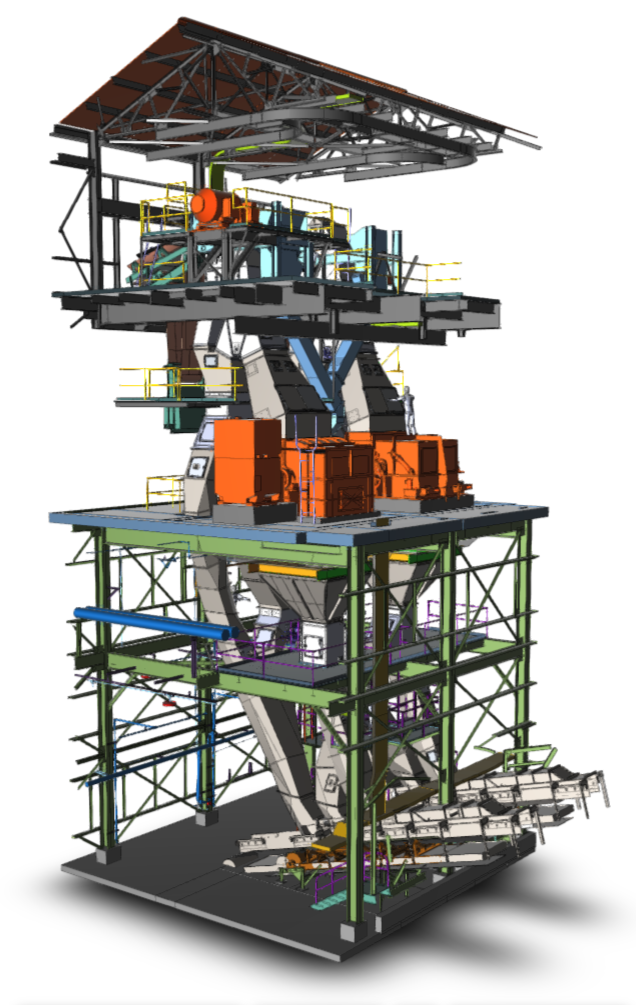
From there, the data feeds the engineering: chute design, flow simulation, structural checks, demolition and installation planning. That handoff is laid out in our bulk material handling retrofit workflow, and it is the work our sister company Acensium does in material handling engineering.
Coal handling is where drawings drift the fastest and where the in-house expertise has thinned the most. Survey it before the retrofit design starts, scope the coverage around where the new work will go, deliver it in plant coordinates, and document what the scan could not see. The interferences are already in the tower. The only question is whether they get found in the model or in the field.
AsBuilt 3D has documented coal handling systems for power plant retrofits for years, and Acensium engineers the work that follows. If you have a conveyor, transfer tower or bunker project in next year's plan, contact our team to scope the survey around it.
Each project represents our commitment to accuracy and technical excellence


Talk with our team about your facility, scope, and objectives to determine the right capture, modeling, and analysis approach.