The unit is down. Scaffold fills the furnace from the ash hopper to the top of the waterwalls, and for a few weeks the inside of the boiler is accessible in a way it won't be again until the next major outage. Tube work gets done, inspections get done, and then the scaffold crew starts taking it all apart. That teardown is the best opportunity most plants have for boiler laser scanning, and it is usually missed because nobody planned for it.
This post covers how a boiler interior gets scanned during an outage, what to capture while you have access, how to schedule it around scaffold and other trades, and what to do with the data once the unit is back online.
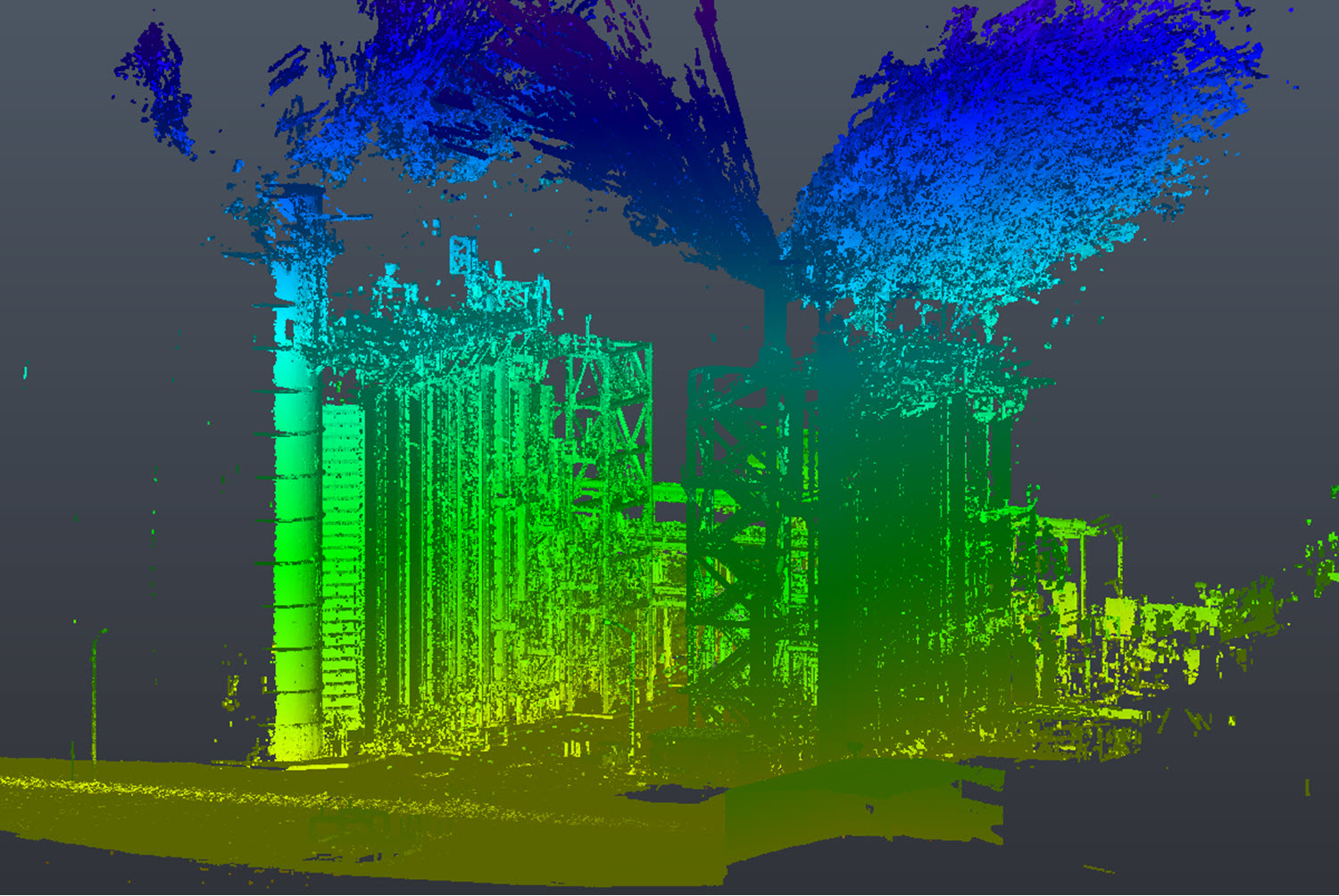
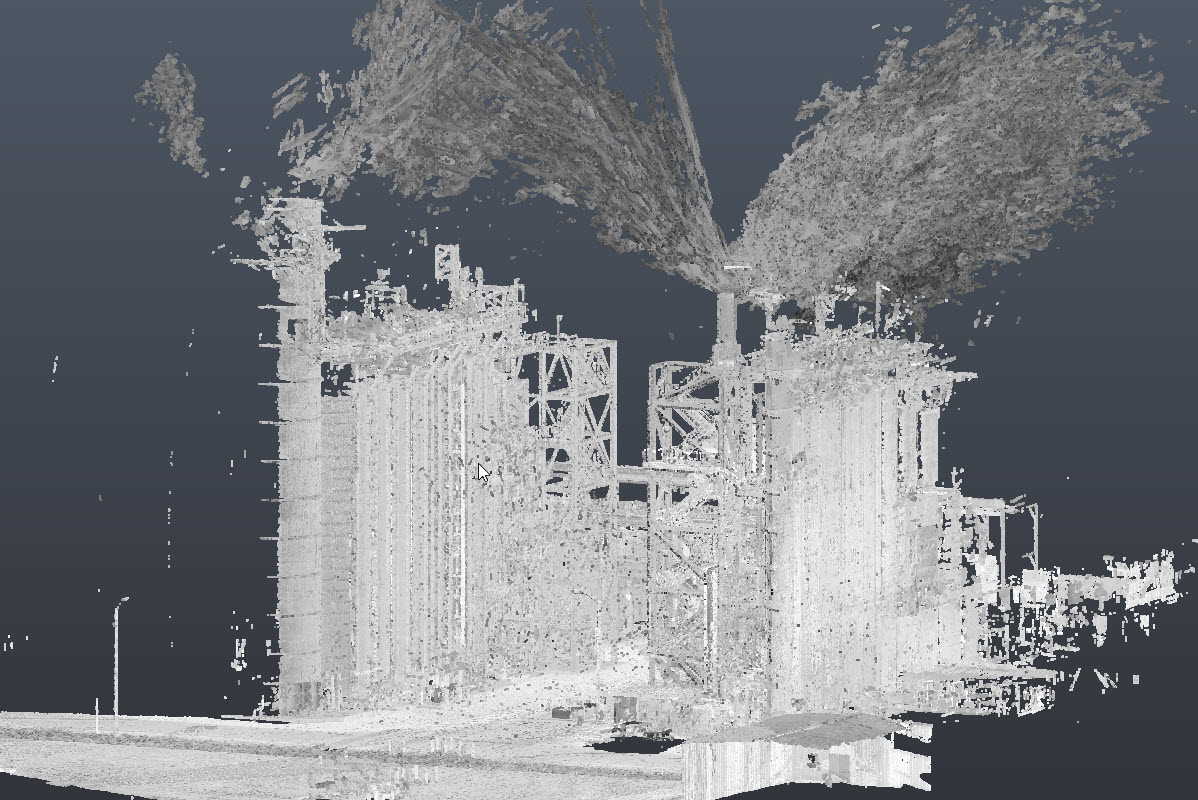
The furnace is one of the least documented spaces in a coal plant, and one of the hardest to see. Most of the time the only view of it is through inspection ports and whatever the last outage report recorded. A scan gives measurable geometry of the interior surfaces as they are at that outage: waterwalls, slopes, openings, and the pendant sections that are within line of sight.
That geometry supports several decisions:
One limit is worth stating plainly: a laser scan measures surfaces. It does not measure tube wall thickness, and it does not replace NDE. Where slag or ash builds up on surfaces, the scan records the buildup, not the tube behind it. It works alongside the inspection program, not instead of it.
The method follows the scaffold. Kyle Cooper, president of AsBuilt and Acensium, describes the sequence:
"But our scan techs will go in and go within the boiler itself, the main chamber. And they'll start at the top and work their way down. And as they come down, they'll actually take away the scaffolding."
The crew scans the top deck first. From there, they work in step with scaffold demolition, capturing each level as the scaffold below it is still in place and the deck above has been cleared. Jason Adkins, AsBuilt co-founder, explains the setting that makes that work:
"…we put the scanner on like this specific horizon setting… We don't scan a full 360. We only scan from the top 180."
With the scanner set above the handrail and capturing only the upper hemisphere, each setup records the walls and structure above and around it, not the scaffold it is standing on. Level by level, the crew works to the bottom, and the individual scans are registered into one complete interior.
The darkness inside the furnace is not a problem. Jason Schwartz, a principal at AsBuilt, puts it simply: "So I don't want light. I'm generating light." The scanner times its own light returning from each surface. Color imagery does need light, so if photos of the interior matter, temporary lighting should be part of the plan.
If a specific repair or modification is planned for the next outage, tell the scan team before mobilization. Coverage can be concentrated where the design needs it rather than spread evenly across the whole furnace.
Some of the most useful outage scanning happens outside the boiler. At one coal plant, the utility wanted to bring in boiler tube bundles twice the length it usually brought in for outage work. As Jason Adkins describes it, "they're trying to eliminate field work, but… they couldn't get them in the plant." The question the plant needed answered was concrete:
"You're bringing this thing in and it's 40 ft long, and I've got to be able to make a turn, but my next level is only 12 ft high. So at what angle can I make that turn? So how big does my opening need to be?"
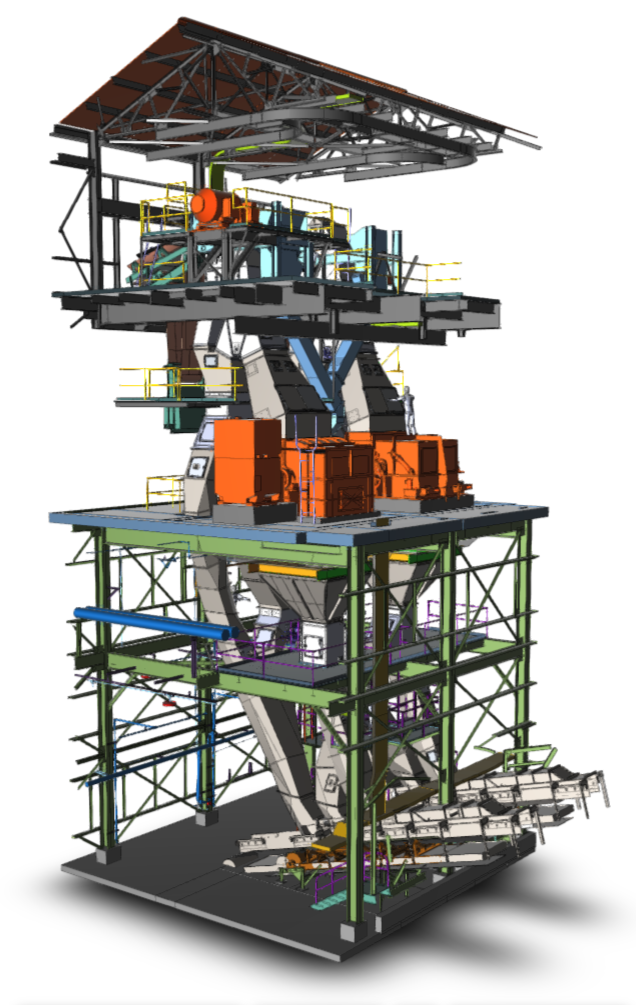
AsBuilt scanned from the roof staging area down through four floors, virtually removed grating, and simulated the whole path: bringing the bundle in, rigging it, pulling it up through multiple floors, angling it through the turns, and lowering it into the boiler. AsBuilt also provided the structural drawings. The rigging question was answered before the outage, not during it.
Boiler interior scanning succeeds or fails in outage planning, well before the unit comes down.
Our pre-turnaround laser scanning checklist covers the broader list of what to lock down before an outage starts.
Boiler entry during an outage runs under the plant's confined space program and its outage safety plan. In general terms, expect confined space entry permits and attendants, lockout and isolation verification, atmosphere monitoring, fall protection on scaffold, and controls for falling slag and ash. Scan crews need to be trained for confined space entry and for the site's specific procedures, and they work inside the same permits as every other trade in the furnace.
For a unit whose retirement date has moved, that baseline carries more weight every year. We covered where it fits in the larger plan in what to document at a coal plant that's staying online.
The boiler interior is accessible for a few weeks every few years, and the scaffold is already there. Put the scan on the outage schedule, sequence it with scaffold demolition from the top down, concentrate coverage where next outage's work will happen, and keep the data as the baseline for the one after that. The access costs the same either way. Only one version of the outage leaves a record of it.
AsBuilt 3D scans boiler interiors during outages and plans rigging paths for large components, and Acensium engineers the work that follows. If you have an outage coming up, contact our team to get boiler scanning into the schedule while there is still time to plan it.
Each project represents our commitment to accuracy and technical excellence



Talk with our team about your facility, scope, and objectives to determine the right capture, modeling, and analysis approach.