
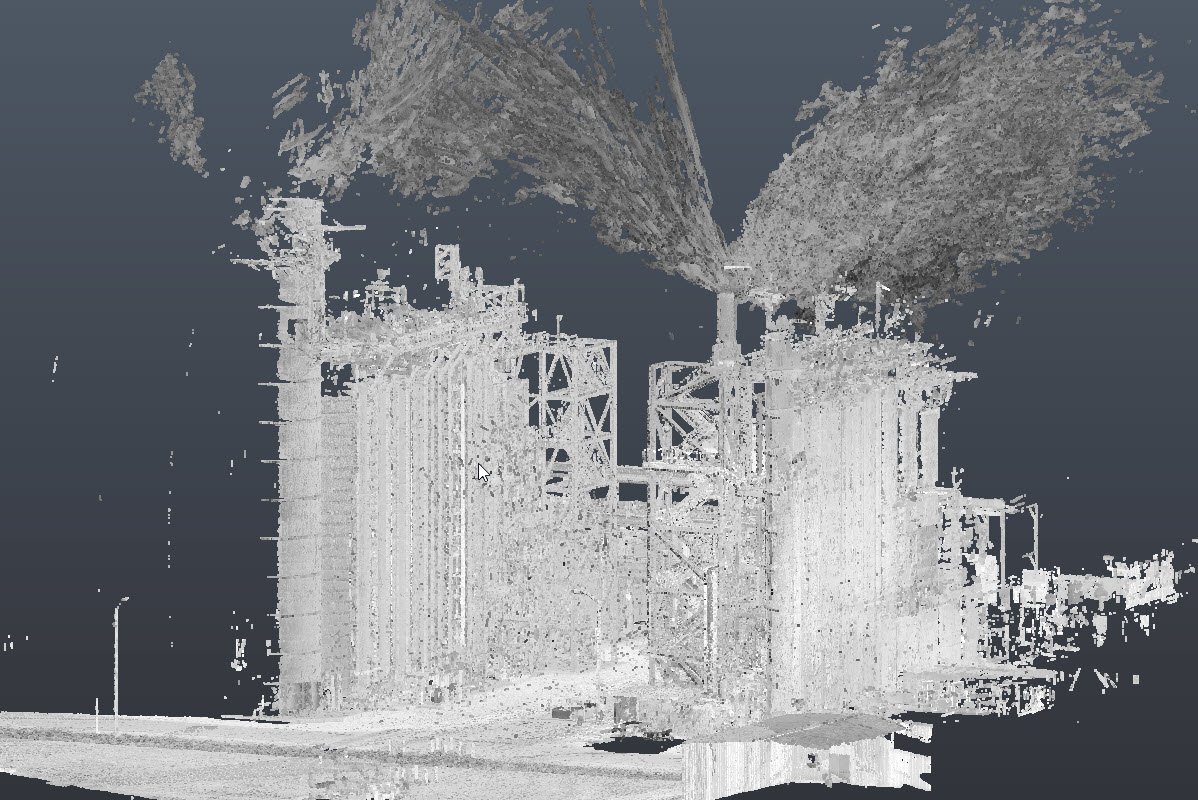
The maintenance plan was written for a unit that had a retirement year. Deferred projects were deferred because the unit would be gone before they paid back. The capital list was short on purpose. Then the date moved, or disappeared, and the same unit is now expected to run for another decade or more. That is the starting point for most coal plant life extension work right now: 40- and 50-year-old equipment, drawings about as old, and a plan that was built to wind down rather than keep going.
The news through September made the pattern hard to miss. On September 18, the Department of Energy issued 202(c) emergency orders keeping two units at NIPSCO's R.M. Schahfer station and CenterPoint's F.B. Culley Unit 2 available through December 18, 2026, nearly a year past their planned retirement. It was the fourth set of such orders since December 2025 (Indiana Capital Chronicle). A week later, DOE issued an order for Craig Unit 1 in Colorado. In Missouri, Ameren's new 20-year plan runs all four Labadie coal units until 2042, where two had been set to retire in 2036 (St. Louis Public Radio). In Georgia, Plant Bowen and Plant Scherer, slated to close around 2030, can now run indefinitely after EPA's carbon rule rollback (GPB). Those units date from the 1970s and 1980s.
Jason Adkins, co-founder of AsBuilt, has watched the same shift from inside plants:
"We had a lot of plants that were on the chopping block for years — well, it's going 2025, oh well, 2028, 2032 — to now, it's like we're not even putting a date on it anymore, because this can't go away. Now we're seeing these things coming into fruition of, well, we've got to do all the things we've been putting off for all these years."
The emergency orders come one at a time. The equipment doesn't work that way. If a unit is going to be available for another 15 years, the maintenance and capital plan has to be built on 15 years, and that plan is only as good as the information about the plant it is built on.
Three things make an older coal plant hard to plan around, and none of them are solved by more engineering hours on their own.
The drawings are old and they were never kept current. Jason describes the drawings handed over on early power plant retrofits plainly: "a lot of times we would have drawings, but they would be from 1978 or something… If you could read them, you could not trust the information." Decades of small modifications rarely make it back into the record set.
The drawings come with a disclaimer. Owner packages typically say to field verify everything. As Jason puts it: "you have to field verify all of these because you cannot use them for design, or if you do, it's on you." On a plant with a long future, that risk lands on every project in the capital plan, one at a time.
The people who knew the plant are gone. A manufacturers' rep who covers coal plants in the Midwest told us that plants still burning coal in Kentucky, Ohio and Indiana used to have material handling engineering groups ten years ago. "Well, those are all gone. And they're lucky to have an engineer that knows anything about their belt scales and things." The knowledge that used to fill the gaps in the drawings has retired with the people who carried it.
We covered the broader cost of this in the hidden cost of outdated as-built drawings. On a plant that was supposed to close, the deferred work is all arriving at once.
You do not need to scan the whole plant in one campaign to get value from it. Start where the deferred work and the risk overlap.
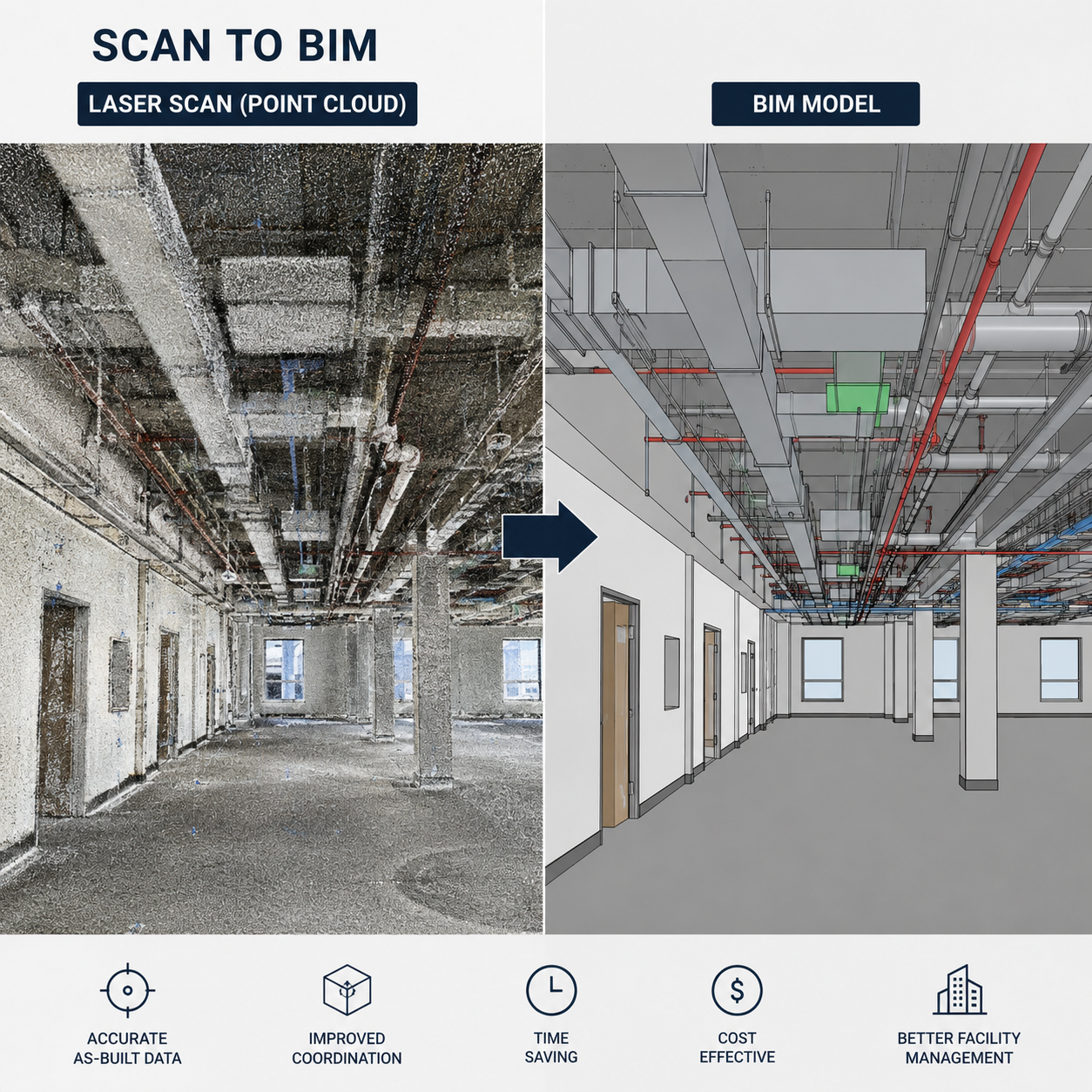
For most power plant areas, terrestrial laser scanning is the right tool: it gives measurable geometry across congested pipe, steel and equipment. Mobile methods can make sense for general documentation of large, open areas where design-grade accuracy is not needed. We compared the options in laser scanning vs. photogrammetry, SLAM and Matterport.
A few decisions at scoping determine whether the data is still useful in year ten:
A point cloud on its own is not a plan. For life extension work, the useful set is usually:
That last item is where a long-life plant gets the most out of a baseline. A scan taken now becomes the reference for the next one. Comparing the two shows movement, sag and deformation over time, which is the basis of the approach in condition-based monitoring with 3D deviation analysis.
Much of a coal plant can be scanned while the unit runs: pipe racks, turbine building areas, coal handling structures, yard and exterior steel, subject to the plant's safety requirements. Boiler interiors, ducts, hoppers and anything requiring confined space entry wait for an outage. A practical sequence is to capture the online areas first, use that data to plan the outage work, then capture the outage-only areas in the window. Our pre-turnaround laser scanning checklist covers what to confirm before the clock starts.
A retirement date shaped every decision about a unit: what got fixed, what got deferred, what got documented. When the date goes away, the plan has to change with it, and the first step is knowing what is physically there. Build a documentation baseline for the systems on the capital list, tie it to plant coordinates, and set it up so the next scan can be compared against it. That is how a 15-year plan gets built on the plant as it actually is.
AsBuilt 3D documents existing conditions at operating power plants, and our sister company Acensium engineers the retrofits that follow. If your unit's retirement date moved and you are rebuilding the capital plan, talk to our team about where to start. AsBuilt documents what exists. Acensium engineers what comes next.
Sources: Indiana Capital Chronicle · St. Louis Public Radio · GPB
Each project represents our commitment to accuracy and technical excellence

Talk with our team about your facility, scope, and objectives to determine the right capture, modeling, and analysis approach.