
Ask three firms to price the same industrial scan and the numbers can land surprisingly far apart. That is usually read as a market problem — someone is padding, someone is cutting corners.
More often it is a scope problem. The three firms were quoting three different jobs, because the request did not constrain the answer enough to make them quote the same one.
Which is good news, in a way. It means the price is not a black box. It is the output of a short list of variables, and you control most of them. Here is the list, roughly in order of how much each one moves the number.
This is the largest single driver and the one most often left unspecified.
Accuracy determines the capture method, the number of instrument setups, the control approach, and how much time goes into registration and quality checking. Tightening the tolerance requirement does not add a small percentage — it can change the entire methodology.
The mistake that costs the most money is not asking for high accuracy. It is asking for high accuracy everywhere. Most industrial projects have a small number of elements that genuinely need tight tolerance — tie-in points, connection interfaces, anchor locations — sitting inside a much larger area that only needs to be good enough for clash detection and layout. Specifying the tight requirement across the whole facility means paying fabrication tolerance for warehouse walls.
Accuracy can and should be specified per element. If you do one thing before requesting a quote, do that. We wrote a full guide to setting the number: what accuracy does your as-built model actually need.
“A scan” and “a model” are separated by most of the project cost.
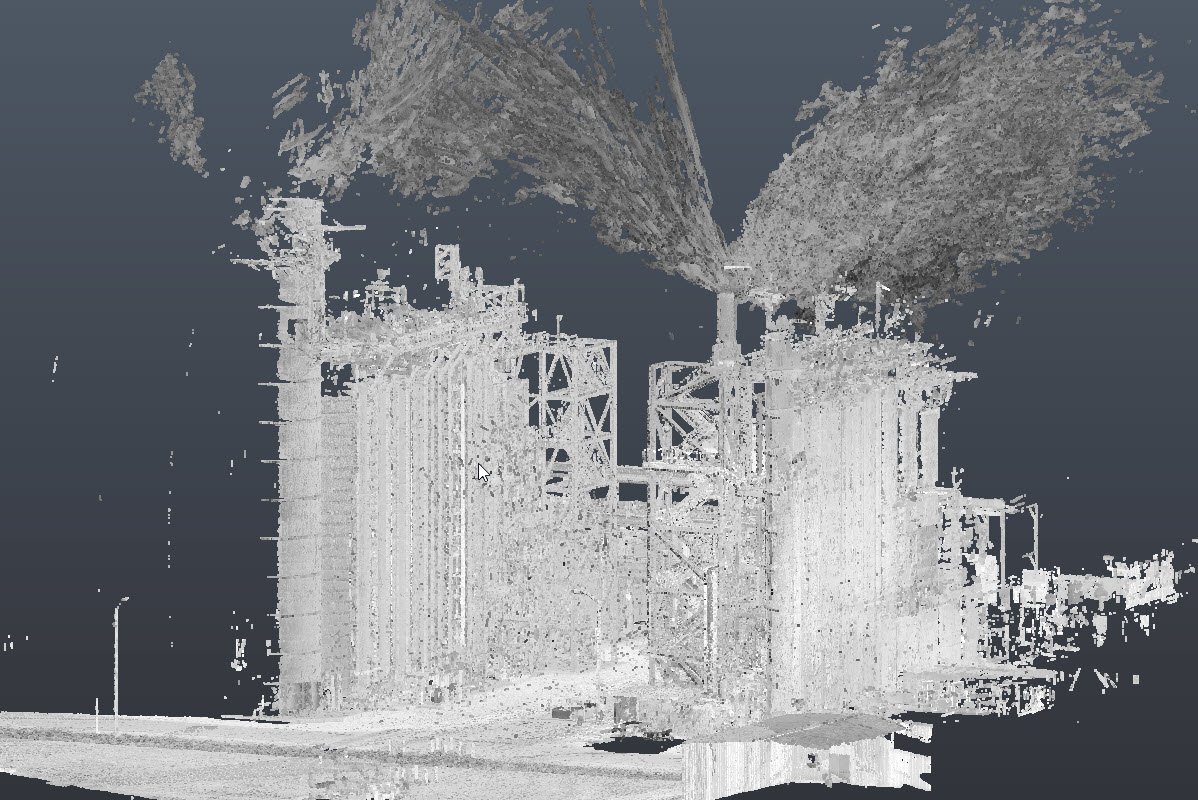
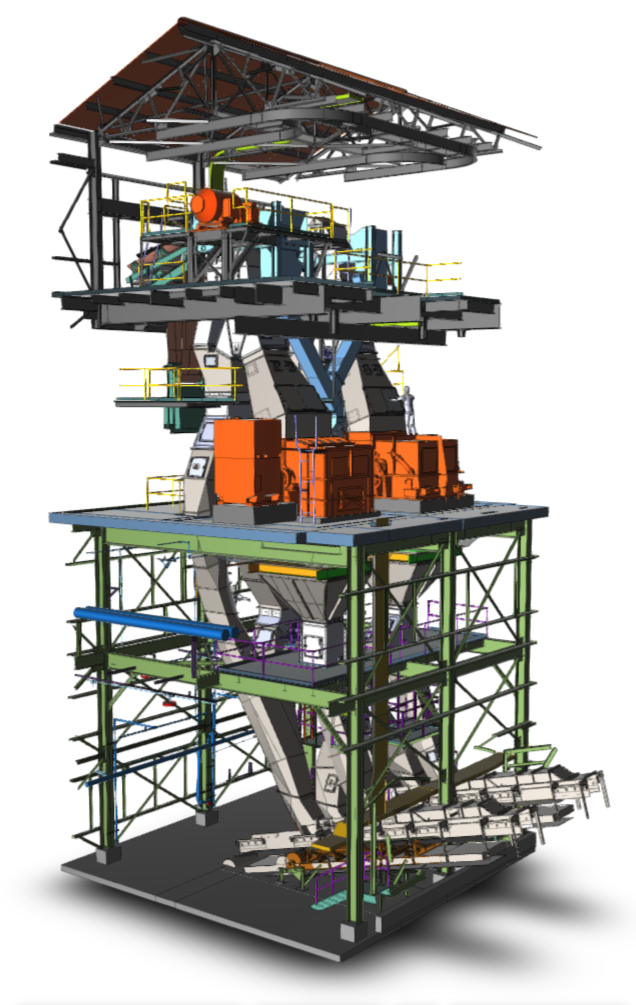
A registered point cloud with 360 imagery is field work plus processing. An intelligent 3D model built from that cloud adds interpretation — someone decides what each object is, fits geometry to it, and represents it as a modeled element in whatever software your team will actually use. That modeling effort frequently exceeds the field effort, sometimes considerably.
Between those two ends sit 2D as-built drawing sets, deviation and verification analysis, and coordination-ready models for BIM and VDC workflows. Each is a different amount of work performed on the same captured data.
So the deliverable question is not a formality. Decide whether you need data, drawings, a model, or an analysis, and say which. If the honest answer is “we are not sure yet,” a phased scope — capture now, decide the deliverable later — is a legitimate and often cheaper structure than guessing high.
Separate from accuracy: how much gets modeled at all.
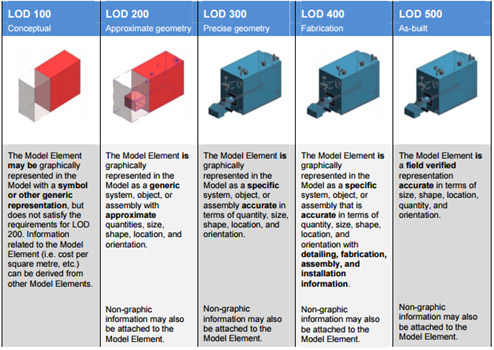
Modeling everything visible in a point cloud is expensive and usually wasteful. Small-bore piping, conduit, hangers, insulation detail, and instrumentation can each multiply modeling hours, and on many projects some of that detail will never be looked at again.
The useful discipline is to set detail by system rather than by project. Process piping at one level, structural steel at another, architectural shell at a third, and anything below a defined size threshold excluded unless it matters for clash detection. A scope that says “model everything” is a scope that has not been thought about, and it will be priced accordingly.
The physical reality of the space drives field time, which drives cost.
Density matters most. A congested pipe rack requires many more instrument setups than an open equipment hall of the same square footage, because every occlusion is a place the scanner cannot see through. Cost tracks setups far more closely than it tracks floor area — which is why area-based pricing rules of thumb tend to mislead in industrial environments.
Then the access variables, which are equally real:
The last one is worth acting on, because it is nearly free. A walkdown before mobilization that clears sightlines and stages away temporary obstructions reduces both field time and the amount of noise that has to be cleaned out of the data later.
Work compresses at a price. Night shifts, weekend work, outage-window mobilization, and multi-crew parallel capture to hit a fixed date all cost more than the same work spread out.
The related and less obvious cost is fragmentation. Capturing an area in one continuous mobilization is meaningfully cheaper than capturing it across three visits scheduled around production, because every remobilization brings setup, control re-establishment, and travel with it.
If your date is genuinely fixed, say so early — it is a scope input, not a negotiating point, and a schedule discovered late is more expensive than one designed for.
Two decisions that sound technical and behave like cost drivers.
Coverage is how much of the facility gets captured. Whole-area capture costs more than targeted capture and is worth it when the model will be reused, when the surrounding area affects the work, or when you would rather not remobilize in eight months. Targeted capture is right when the scope is genuinely bounded and unlikely to grow. Both are defensible; guessing is not.
Control is how the data is tied to a coordinate system. Establishing survey control adds field time and is essential when the data has to align with other datasets — an existing plant grid, a design model, a prior capture used for comparison, or work by other trades. Skipping control is cheaper right up until the day someone needs to overlay two datasets and finds they do not line up.
The cheapest deliverable is one whose accuracy nobody checks. It is also the one you cannot rely on.
Verification work — control checks, registration reports, documented accuracy statements — is real effort and appears in the price. It is also the only thing standing between a stated tolerance and a marketing claim. When you compare quotes, check whether verification is included, because a bid without it is not the same product at a lower price. It is a different product.
If you take nothing else from this: quote variance is mostly scope variance, and it is fixable from your side.
State what each deliverable will be used for in plain language. State the accuracy requirement, and state it separately for the elements that need tight tolerance. Say whether the requirement applies to the captured data, the model, or both. Set detail by system. Name your access constraints and your date. Say how accuracy will be verified.
That is roughly a half page, and it changes the bids more than any amount of negotiating does. The full version, including the four things worth deliberately leaving to the vendor, is here: how to write a scan-to-BIM RFP that gets you comparable bids.
Four reliable ways to reduce cost that do not reduce the usefulness of what you get:
Narrow the tight-tolerance elements. Name the handful of locations that need it. Let the rest be specified to what it is actually used for.
Reduce detail, not accuracy. A correctly located model with less in it is usually more useful than a richly detailed model in the wrong place. Detail is the more negotiable of the two dials.
Capture once, deliver in phases. Field mobilization is the expensive irreversible step. Capturing the full area and modeling only what you need now leaves the rest available without a second visit.
Prepare the site. Clear sightlines, arrange escorts and permits ahead of time, and consolidate access into one window. This costs you a morning and takes real hours off the field schedule.
And one that is not a saving at all, though it looks like one: choosing a lower-accuracy capture method to reduce the day rate. Handheld and mobile methods are legitimately the right tool for general arrangement work, and photogrammetry has real uses. They are the wrong tool when tight fit-up decisions will be made from the result, and a method mismatch is discovered late, when re-capture costs more than doing it properly would have. The comparison is here: laser scanning vs. SLAM vs. photogrammetry vs. Matterport.
Cost follows setups, tolerance, and modeling hours. Area is a weak proxy for all three, which is why per-square-foot estimates rarely survive contact with an industrial facility.
The single highest-leverage thing you can do before requesting a quote is to decide what decisions will be made from the deliverable. Everything else — method, accuracy, detail, coverage, control — follows from that answer, and so does the price.
Working out a budget? Tell us what you will be building from the model and we will scope the capture to those decisions rather than to the whole building. Get a quote →
Related reading: What accuracy does your as-built model actually need · How to write a scan-to-BIM RFP
Each project represents our commitment to accuracy and technical excellence



Talk with our team about your facility, scope, and objectives to determine the right capture, modeling, and analysis approach.