
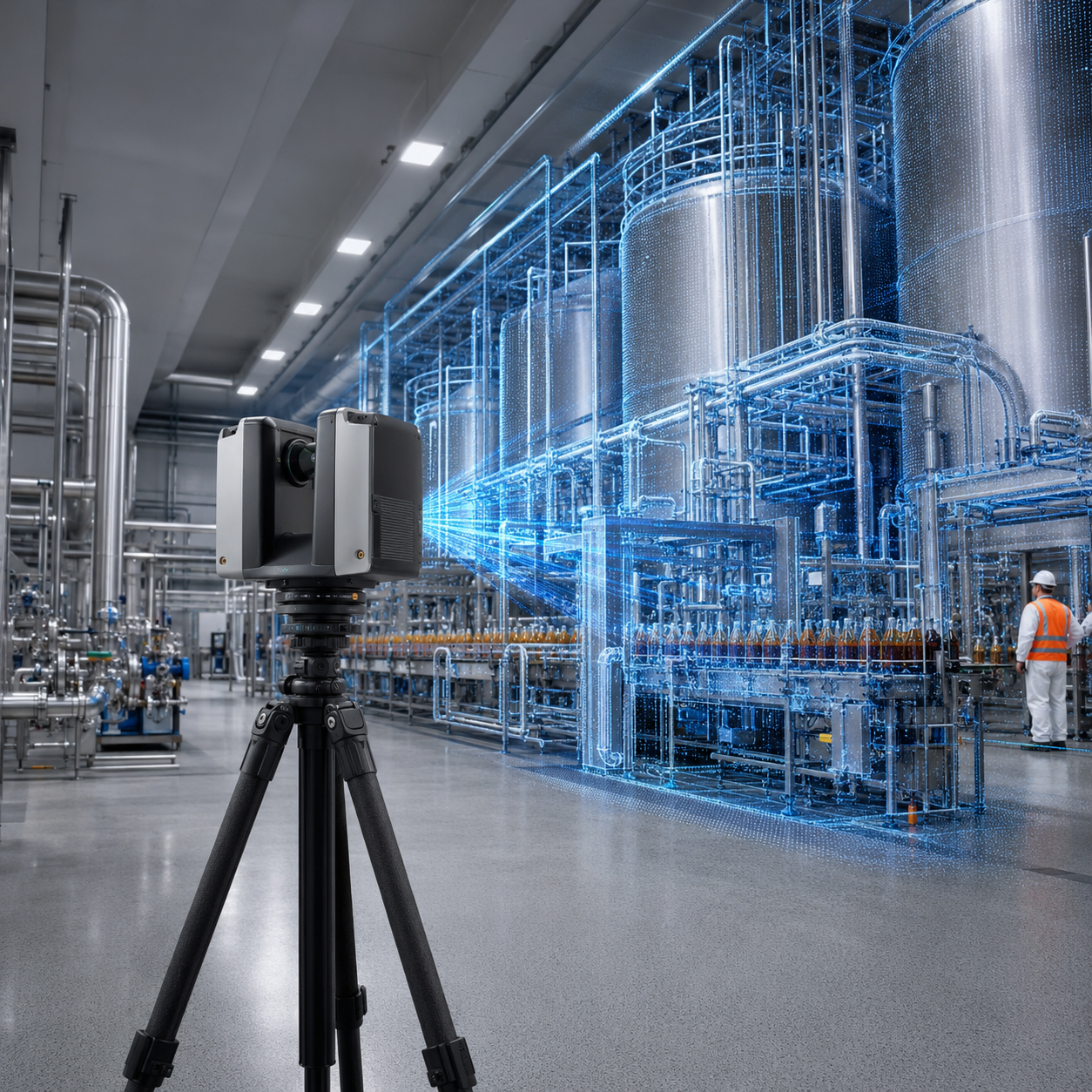
The design needs to start this quarter. The next scheduled outage is months away. The drawings for the area are old, carry a field-verify note, and nobody on site is confident they reflect the last round of modifications. The usual answer is to wait for the unit to come down or send people out with tape measures. Neither is necessary for most of the plant. Laser scanning operating power plant equipment is routine work, as long as the scope is honest about which areas can be captured online and which have to wait.
Here is how it works at a running coal plant: what you can capture, what changes when the unit is hot, how safety and access are handled, and how to split the work between now and the outage.
Anywhere plant personnel can safely walk during normal operation is usually available for scanning with the right access, orientation and escort. That typically includes:
What waits for an outage is anything that requires the unit, or a system, to be down: boiler interiors, ducts and hoppers, precipitator and baghouse internals, bunker interiors with material in them, and any space that requires confined space entry. Areas classified for combustible dust have their own rules, which we covered in can you laser scan in a combustible dust area.
Hand measurement in an operating plant is slow, it puts people on ladders and near hot surfaces for longer, and it only captures the dimensions someone thought to take. It is also inconsistent. Jason Adkins, co-founder of AsBuilt, puts it this way:
"I could send five different guys out to the field to pull dimensions and measurements and end up with five different sets of data when they came back. So it's kind of like, what is the truth here?"
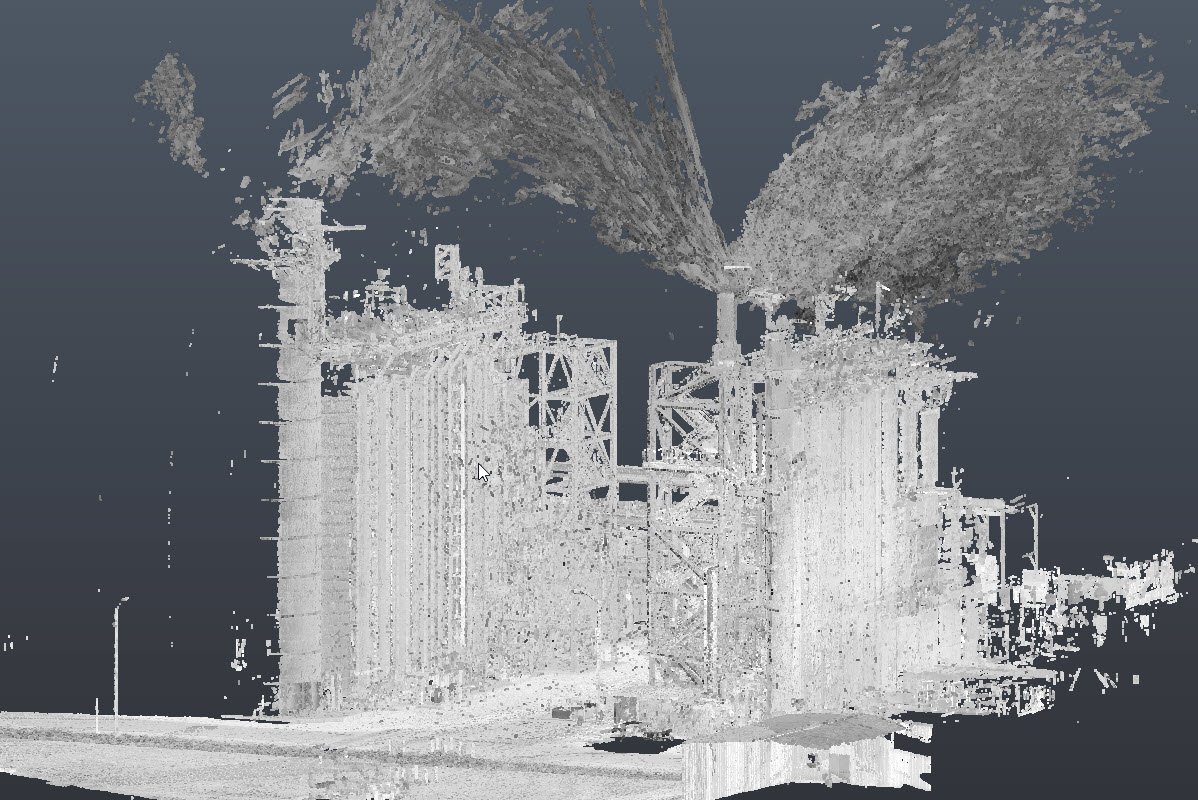
A scan captures everything in line of sight from each position, measured the same way every time. When the design team has a question later, the answer is usually already in the data instead of requiring another trip to site.
Scanning a running plant is not the same as scanning a new building. A few conditions affect the data, and a good scan plan accounts for each one.
Vibration. Scanners need a stable setup. Grating and platforms near fans, pumps, pulverizers and the turbine can vibrate enough to degrade a scan. Setting up on solid structure where possible, and checking registration quality as the work proceeds, keeps it in check.
Moving equipment. A running conveyor belt, rotating shafts and people walking through a scan create noise in the point cloud. That noise is cleaned up in processing, but the stationary geometry behind moving equipment can end up with gaps. Extra positions from different angles help.
Heat, steam and dust. Heat shimmer, steam plumes and airborne dust add noise and reduce effective range. Coal dust and fly ash also collect on optics, so equipment gets cleaned and checked through the day.
Thermal growth. Hot piping and ductwork are not in the same position when they are cold. A scan of an operating line records the hot position. That is often exactly what you want for interference checks, but the scan record should note the operating state at the time of capture so the design team knows which condition they are looking at.
Lighting. Dark areas are not a problem for the laser. Jason Schwartz, a principal at AsBuilt, explains why: "So we don't want light, right. The best scan I could ever take would be 200 ft underground in a cave. So I don't want light. I'm generating light." The scanner times its own light returning from surfaces, so dim penthouses and unlit galleries scan well. Color photography captured alongside the scan does need light, so if photo imagery matters for an area, plan lighting for it.
Every plant runs its own contractor safety program, and the scan crew works inside it. In general terms, expect:
The single biggest schedule risk in online scanning is usually access, not scanning. Getting badging, training and escort availability sorted before the crew arrives is what keeps the field days productive.
The most useful approach on a running plant is to treat it as two captures:
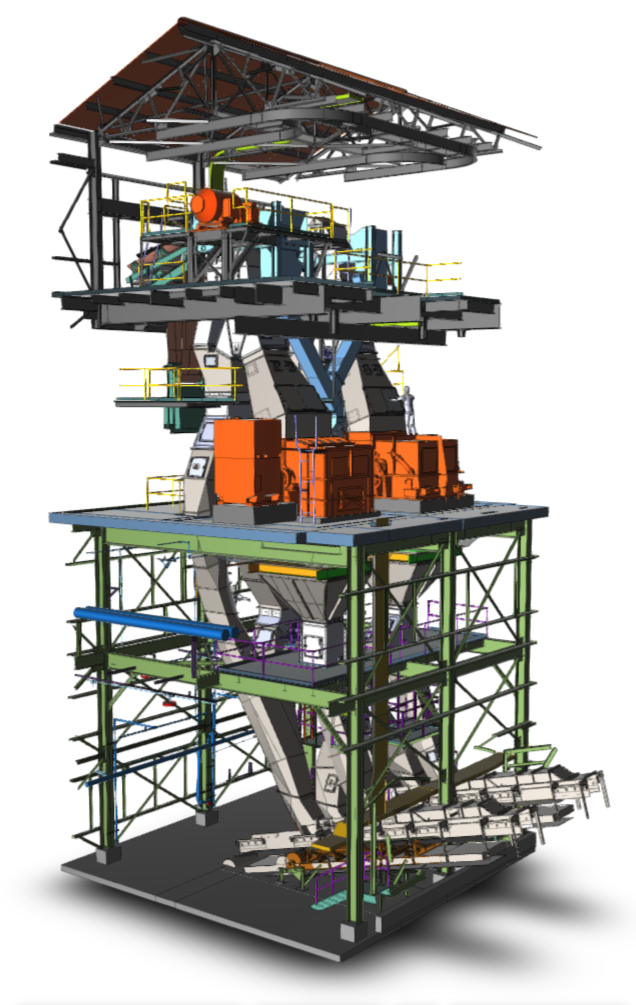
Because both captures are registered to the same coordinates, they combine into one data set. The outage scope gets smaller, better defined and easier to schedule, which matters when every trade is competing for the same window. The pre-turnaround laser scanning checklist covers what to lock down before that window opens.
If the unit's future just got longer, this is also the start of a baseline. We covered where to focus that effort in what to document at a coal plant that's staying online.
You do not have to wait for an outage to get accurate existing conditions at a coal plant. Scan what is accessible now, note the operating state, document the gaps, and use that data to shrink and sharpen the outage scope. The design starts on time, and the outage window gets spent on the areas that actually need it.
AsBuilt 3D scans operating power plants under each site's safety program, and our sister company Acensium engineers the retrofit work that follows. If you have design work that can't wait for the next outage, contact our team to scope the online capture and plan what's left for the window.
Each project represents our commitment to accuracy and technical excellence

Talk with our team about your facility, scope, and objectives to determine the right capture, modeling, and analysis approach.