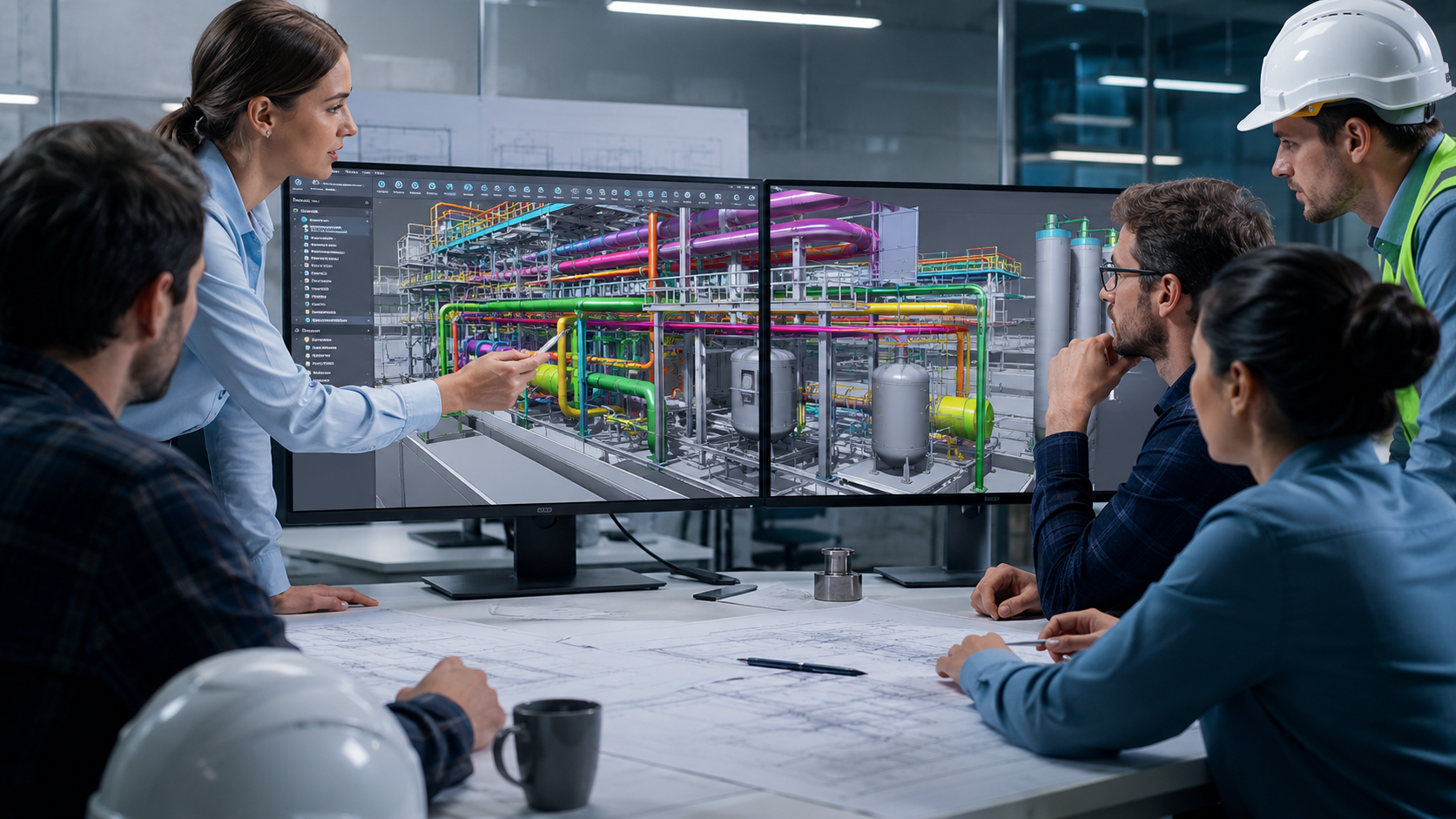
BIM coordination is one of the most valuable processes in modern design and construction, but it is also one of the most misunderstood.
Many teams reduce it to clash detection. Others think of it as a late-stage review step that happens after the design is mostly complete. In reality, BIM coordination is a project risk management process. It helps teams align design intent, existing conditions, installation sequencing, fabrication requirements, and field constraints before those issues show up as RFIs, schedule delays, change orders, or rework.
That matters on any project. It matters even more in retrofit, brownfield, and industrial work, where existing conditions are often incomplete, outdated, or simply wrong on paper. In those environments, BIM coordination is only as strong as the information behind it. If the starting point is unreliable, the coordination effort usually is too.
That is where AsBuilt brings a different level of value. AsBuilt does not treat BIM coordination as a standalone software task. It approaches coordination as the outcome of accurate reality capture, disciplined modeling, and practical constructability review. The result is coordination based on what actually exists in the field, not what legacy drawings suggest should exist.
In this guide, we will cover what BIM coordination is, how the process works, what deliverables matter, why projects fail, and how scan-based workflows help owners, engineers, contractors, and fabricators reduce risk before construction begins.
BIM coordination is the process of combining multiple discipline models into a shared digital environment so conflicts, fit issues, access problems, and constructability risks can be identified and resolved before work reaches the field.
At a basic level, BIM coordination helps answer questions like these:
Will the piping fit where the design says it will fit?
Can the ductwork, steel, cable tray, valves, equipment, and access zones all coexist in the same space?
Can the system be installed in the sequence the team is planning?
Can it be maintained safely once it is in place?
Does the proposed design actually work with the real-world existing conditions onsite?
Those questions are easy to overlook in 2D. They become much clearer in a coordinated 3D model.
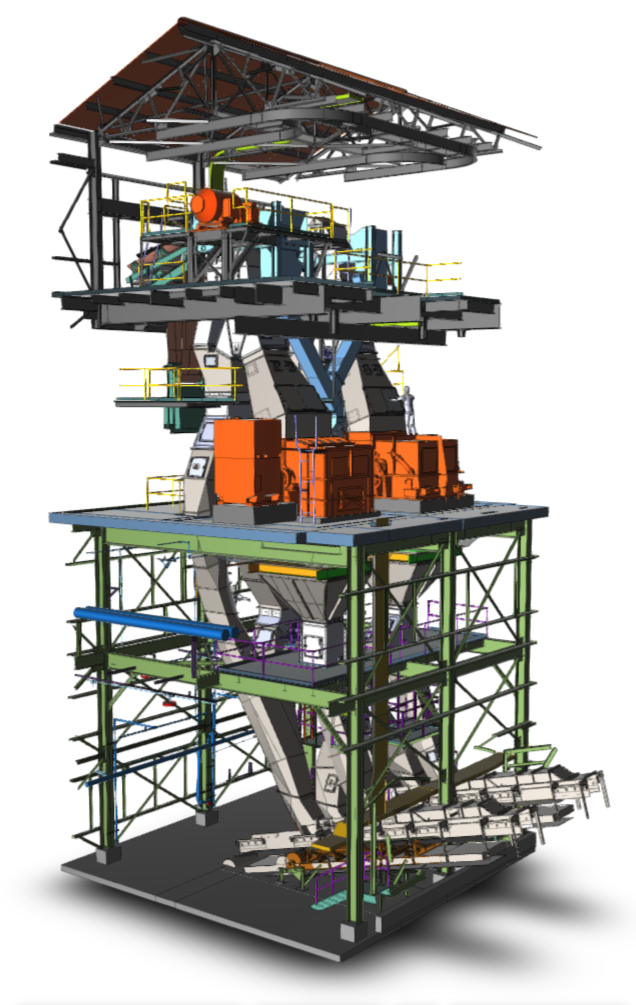
On simple projects, coordination may focus on a limited number of systems. On complex projects, especially in industrial facilities, it often involves structural, mechanical, electrical, plumbing, process piping, equipment, supports, access paths, and maintenance clearances all at once.
The key point is this: BIM coordination is not just about finding clashes. It is about making sure the project can actually be built.
Poor coordination rarely announces itself early. It usually appears later, when fixing it is more expensive.
It shows up when a new pipe run intersects structural steel that no one modeled correctly. It shows up when equipment access doors cannot swing open after installation. It shows up when prefab assemblies arrive onsite and do not fit because the field dimensions were based on assumptions. It shows up when shutdown windows are consumed by solving geometry problems that should have been resolved weeks earlier in the model.
That is why BIM coordination matters. It helps teams move critical problem-solving out of the field and into the planning phase, where changes are faster, cheaper, and far less disruptive.
Check out: When Should Contractors Outsource BIM Coordination?
For owners, engineers, and builders, the benefits are substantial:
When coordination happens before construction, teams can identify conflicts before they create downtime, delay fabrication, or trigger costly rework.
A design can look clean on paper and still be difficult or impossible to install in a live facility. BIM coordination helps validate real installation conditions, not just design intent.
Prefabrication depends on accuracy. If dimensions are wrong, spools, skids, supports, and assemblies may need to be modified in the field. Coordinated, field-verified models reduce that risk.
Coordination creates a shared view of the work. Engineering, project management, field leadership, fabrication teams, and owners can all review the same model and make decisions from the same source of truth.
The earlier coordination problems are found, the less expensive they are to solve. That is especially important on projects with narrow outage windows, tight equipment layouts, or complex retrofit conditions.
These terms are related, but they are not the same.
Clash detection is one component of BIM coordination. It is the process of identifying geometric conflicts between objects in a model. For example, a pipe crossing through a beam or ductwork intersecting cable tray.
BIM coordination is broader. It includes:
→ model preparation
→ model alignment
→ existing-condition validation
→ clash review
→ clearance analysis
→ constructability review
→ issue tracking
→ team coordination meetings
→ revision cycles
→ decision-making before release to fabrication or construction
A project can run clash detection and still fail coordination.
That happens when the models are incomplete, based on outdated drawings, missing access requirements, missing existing field modifications, or not reviewed by the right stakeholders. Successful teams do not just generate clash reports. They use coordination to close issues and improve buildability.
The goal is not a model that looks clean in software.
The goal is a project that installs with fewer surprises.
That means effective BIM coordination should help teams answer practical questions, such as:
→ Can this pipe rack be installed without field modification?
→ Can the duct routing clear the equipment and still allow maintenance access?
→ Can the valve be reached after the new line is in place?
→ Will the support steel interfere with the cable tray?
→ Can this equipment replacement happen inside the outage window?
→ Can the contractor fabricate confidently before mobilizing?
When BIM coordination is done well, the model becomes a decision-making tool, not just a visual deliverable.
Every project is different, but strong BIM coordination usually follows a clear sequence.
The process starts by defining what is being coordinated and why.
That includes questions like:
→ Which systems are in scope?
→ What level of detail is required?
→ Is the goal design coordination, trade coordination, fabrication support, or all three?
→ What are the highest-risk areas?
→ Are access, maintainability, or shutdown constraints especially important?
→ What decisions need to come out of the model?
If this step is rushed, teams often waste time coordinating the wrong things or miss the issues that matter most.
This is where many retrofit projects succeed or fail.
If the team starts from outdated drawings or assumptions, the coordination model may already be wrong before the first clash test runs. Existing industrial facilities often include undocumented modifications, shifted equipment, added supports, reworked utilities, and legacy conditions that do not match the record drawings.
That is why verifying existing conditions is so important.
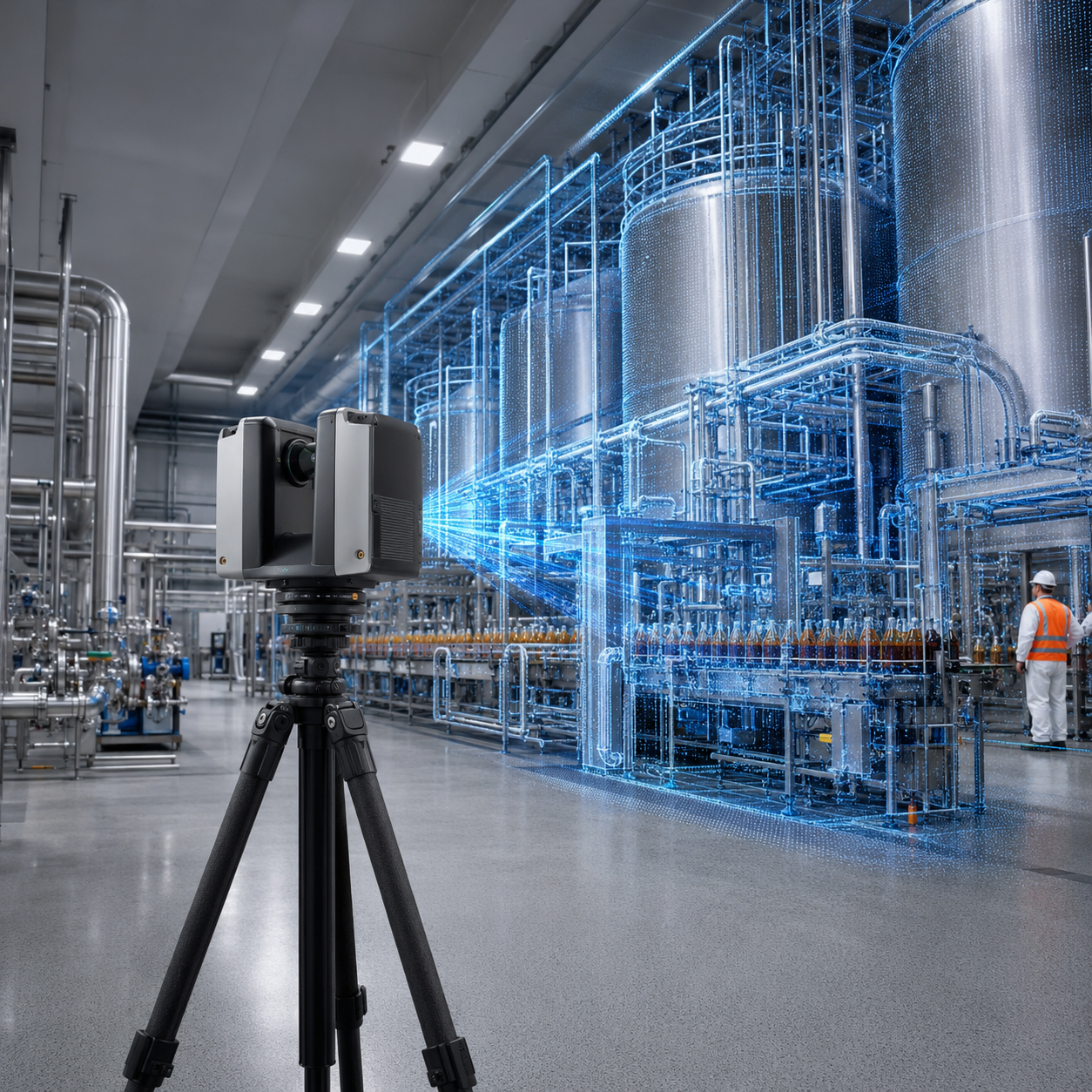
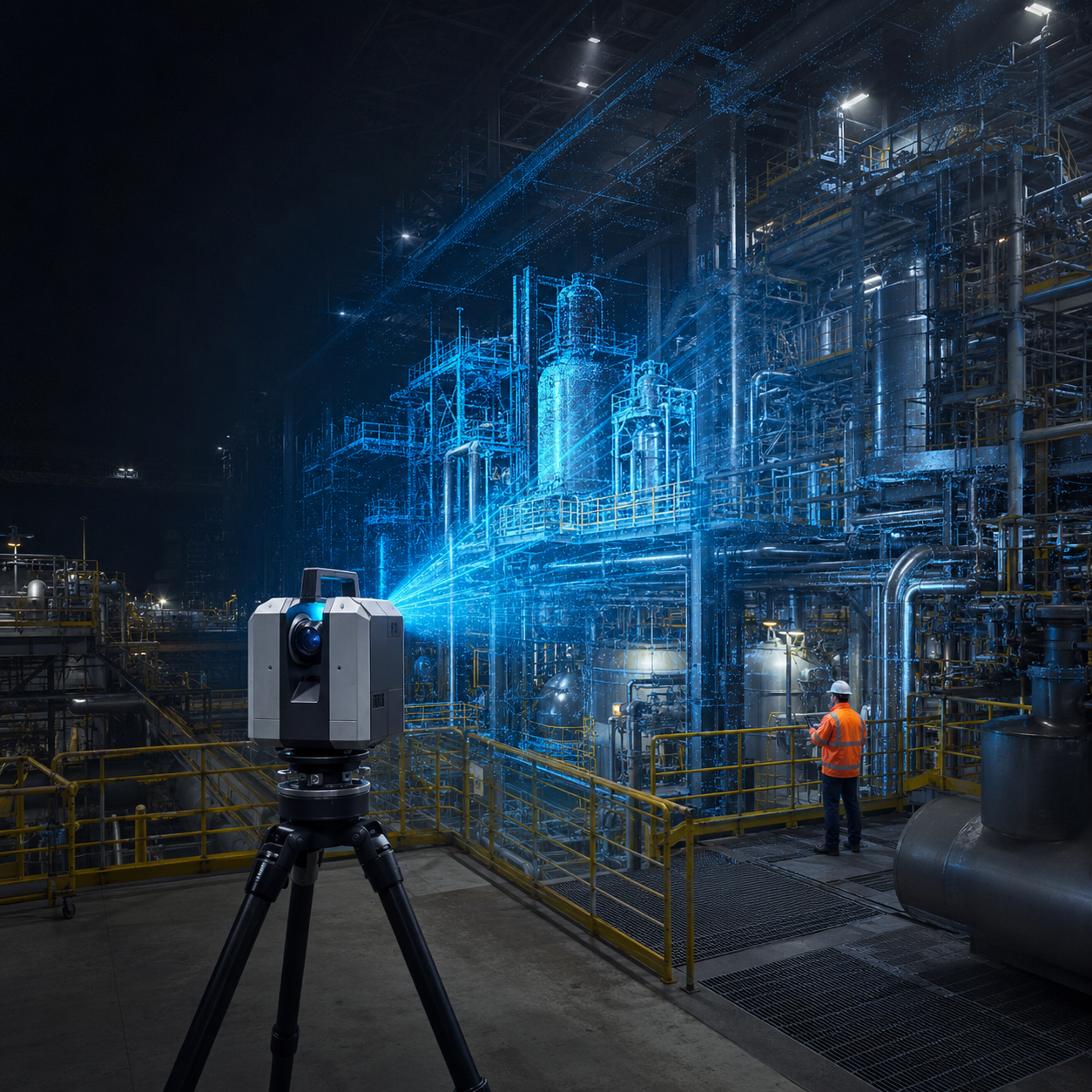
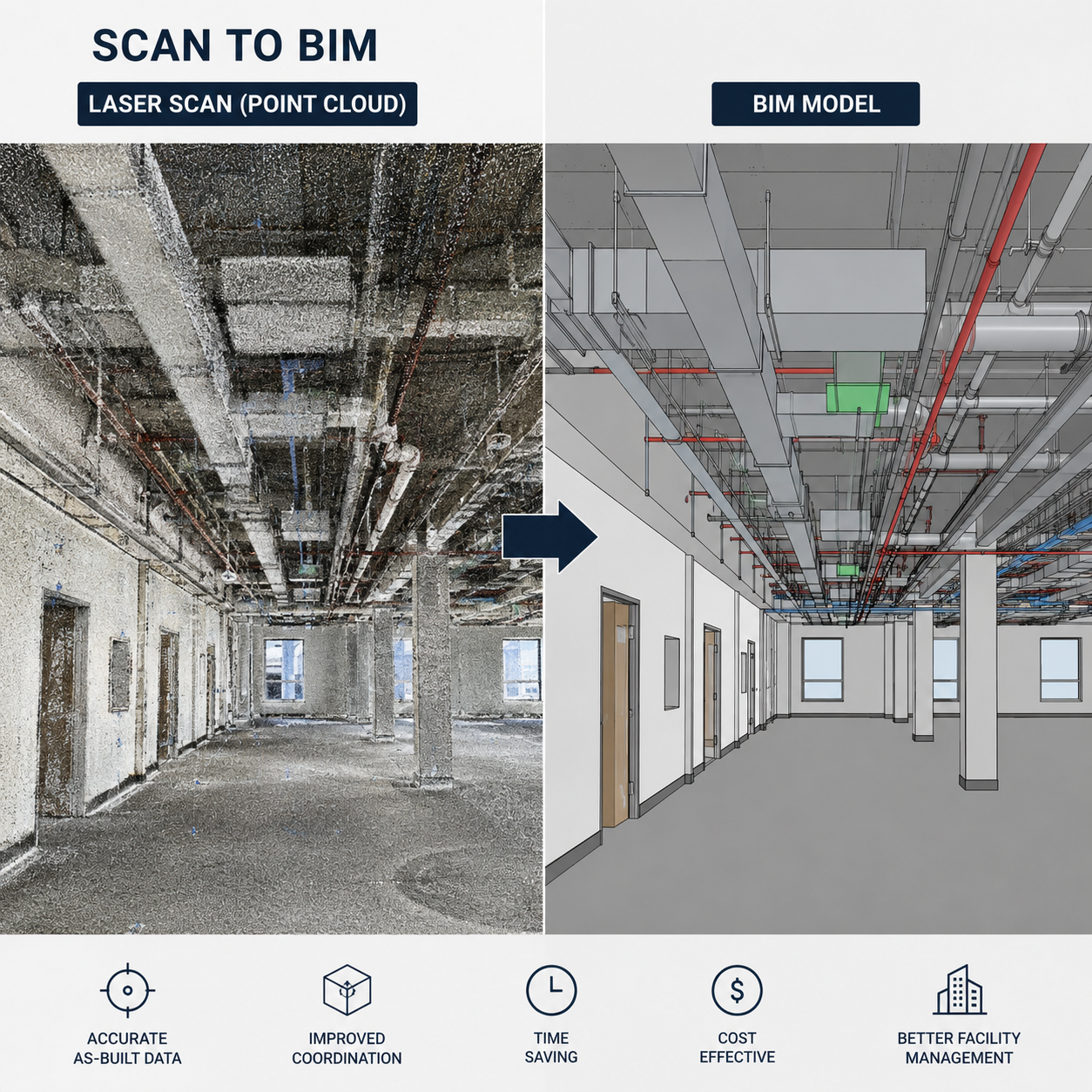
For many projects, the most reliable way to do this is through laser scanning and reality capture. A properly executed scan campaign creates a high-density point cloud showing what is actually in place. That point cloud becomes the basis for accurate as-built modeling and informed coordination.
This is one of AsBuilt’s core strengths. Instead of coordinating from uncertain inputs, AsBuilt helps teams start with field-verified geometry that reflects the real environment.
Once the baseline is established, the project team prepares the models that will be used for coordination.
These can include:
→ existing-condition models
→ architectural models
→ structural models
→ mechanical models
→ electrical models
→ plumbing models
→ process piping models
→ equipment or vendor models
The quality of the coordination depends heavily on model quality. Inaccurate origins, inconsistent detail levels, incomplete scope, or poor naming standards can create confusion and reduce confidence in the results.
The next step is bringing the models together into a common environment for review and analysis.
This is where teams align coordinates, confirm versions, establish review zones, and prepare the project for issue tracking and decision-making. A clean coordination environment makes it much easier to isolate problems, assign ownership, and keep teams moving.
This is the step most people picture when they think of BIM coordination, but it is only part of the process.
At this stage, teams review:
→ hard clashes
→ soft clashes
→ clearance conflicts
→ access constraints
→ maintenance zones
→ routing issues
→ support conflicts
→ installation sequence concerns
→ fit-up risks against existing conditions
On industrial projects, constructability review is especially important. A model may be technically clash-free and still be difficult to install because of shutdown limitations, safety constraints, access restrictions, or limited working space.
Once issues are found, they need to be organized and resolved, not just reported.
That means assigning responsibility, reviewing alternatives, revising models, and deciding what changes are required to reach a buildable outcome.
Strong coordination teams are disciplined here. They do not let clash reports become static lists. They move the project toward decisions.
BIM coordination is iterative.
Models are revised. Reviews are repeated. New equipment is added. Routing changes. Field conditions are clarified. Coordination cycles continue until the team reaches the confidence needed for fabrication, installation, construction planning, or stakeholder approval.
The end goal is not perfection in software. It is confidence in execution.
BIM coordination is valuable in new construction, but it becomes far more critical in existing facilities.
That is because industrial, manufacturing, power, utility, and brownfield environments come with conditions that make coordination more difficult:
→ drawings may be outdated or incomplete
→ modifications may never have been documented
→ systems may have been rerouted several times over the years
→ access may be limited
→ operations may still be live
→ shutdown windows may be short
→ tolerances may be tight
→ the cost of an installation error may be very high
In these environments, coordination cannot rely on assumptions. The team needs a trusted baseline.
That is why scan-based BIM coordination is so effective for retrofit and brownfield work. It closes the gap between what the drawings say and what the facility actually is.
Laser scanning does not replace coordination. It improves the quality of coordination.
When a facility is scanned correctly, the result is a point cloud that captures existing geometry with high accuracy. That point cloud can be used to create as-built models, validate fit conditions, verify equipment locations, and evaluate whether the proposed design works within the real available space.
That gives project teams several major advantages:
Instead of relying on old drawings, teams coordinate against the actual built environment.
Before fabrication or installation, teams can confirm that the proposed systems fit where they need to fit.
Undocumented supports, shifted equipment, and legacy interferences are more likely to be found before construction begins.
Owners, engineers, and contractors gain confidence because the model is grounded in reality, not guesswork.
The scan data and as-built models remain useful after the immediate project is complete, supporting future upgrades, maintenance planning, and change management.
For AsBuilt, this is the foundation of the service. Laser scanning, scan-to-BIM modeling, coordination, and verification are not separate disconnected tasks. They are linked parts of a better project workflow.
Not every project needs the same outputs, but most strong BIM coordination efforts result in a combination of the following deliverables.
These provide the main visual and analytical environment for issue resolution and stakeholder review.
For retrofit work, these are often just as important as the proposed design models because they define the real space available.
These document conflicts, assignments, priorities, and resolution status.
Not every problem is a physical clash. Maintenance clearance, operator access, removal paths, and safety zones all matter.
This is especially valuable before prefabrication, major equipment replacements, and outage work.
Coordinated 3D models often drive layout plans, sections, spool details, isometrics, and other downstream deliverables used by field and fabrication teams.
The easier it is for project stakeholders to review the data, the easier it is to align decisions and reduce misunderstandings.
Even teams with strong technical capabilities can struggle when the process is weak. Some of the most common mistakes include:
This is the biggest failure point on retrofit projects. If the baseline is wrong, the coordination effort will be wrong too.
Software is just the tool. Effective coordination requires process, standards, communication, accountability, and constructability awareness.
A project can be clash-free and still fail in the field because of access limitations, installation sequence problems, or maintenance conflicts.
The later the coordination effort begins, the fewer options the team has and the more expensive changes become.
A model may satisfy the designer and still frustrate the installer if real field constraints are not considered.
Industrial environments demand practical understanding of live operations, equipment congestion, tolerances, and constructability risk. Generic modeling support is not always enough.
BIM coordination can benefit almost any project, but it is especially valuable for:
→ owners planning capital improvements in active facilities
→ EPCs managing multi-discipline retrofit projects
→ contractors responsible for installation planning and trade coordination
→ fabricators who need reliable dimensions before production
→ engineering firms that need better confidence in existing conditions
→ project teams working under outage, shutdown, or phased installation constraints
In short, the more expensive mistakes are in the field, the more valuable coordination becomes.
The best time is earlier than most teams think.
If your project includes any of the following, coordination support is usually worth considering:
→ existing conditions are uncertain
→ record drawings are incomplete or unreliable
→ multiple trades must work in the same area
→ prefabrication is planned
→ the project is happening in an active facility
→ downtime is expensive
→ major equipment must fit the first time
→ field rework would affect schedule, safety, or cost in a significant way
Waiting until the project is already in trouble usually means the coordination effort becomes reactive. The best results come when accurate data and coordination are built into the planning process from the start.
Many firms can run coordination software.
Far fewer can support BIM coordination in the environments where it matters most: existing industrial facilities, brownfield projects, outage-driven scopes, congested process areas, and retrofit work where reliable existing-condition information is hard to get.
AsBuilt’s advantage is that it brings the full chain together:
→ reality capture
→ laser scanning
→ existing-condition verification
→ scan-to-BIM modeling
→ coordination support
→ fit and clearance analysis
→ documentation for design, fabrication, and field execution
That matters because BIM coordination is only as effective as the data, workflow, and technical judgment behind it.
AsBuilt is built for teams that need more than model management. It is built for teams that need confidence.
No. Large projects often benefit the most because they involve more disciplines and more potential conflicts, but even focused retrofit scopes can justify coordination when space is tight and field risk is high.
Usually not. Clash detection is useful, but it does not fully address clearances, maintenance access, installation sequence, or the quality of the underlying existing-condition data.
Scan-to-BIM is the process of capturing existing conditions and creating usable models from scan data. BIM coordination uses those models, along with proposed design models, to identify issues and improve constructability.
Because retrofit work often starts with uncertainty. When the existing conditions are wrong, every downstream decision becomes less reliable.
Yes. In fact, that is one of its biggest advantages. Accurate coordinated models help fabricators build with more confidence before arriving onsite.
Manufacturing, power generation, utilities, process plants, bulk material handling, and any facility where congested systems and undocumented changes increase project risk.
BIM coordination is not just about making models work together.
It is about helping projects work in the real world.
When done well, BIM coordination reduces field conflicts, improves constructability, supports prefabrication, strengthens team alignment, and helps owners and contractors move into execution with fewer unknowns. But in existing facilities, those outcomes depend on one thing above all else: the quality of the starting information.
That is why AsBuilt’s approach matters.
By combining accurate reality capture, field-verified modeling, and practical coordination support, AsBuilt helps teams make decisions from what actually exists, not what outdated drawings imply. For retrofit, brownfield, and industrial work, that difference can be the line between predictable execution and expensive surprises.
If your project depends on fitting new work into existing conditions, AsBuilt can help you start with the right data and coordinate with confidence.
👉 Need BIM coordination grounded in real field conditions? Talk with AsBuilt about laser scanning, existing-condition modeling, and scan-based coordination support for your next retrofit, outage, or facility upgrade.
Each project represents our commitment to accuracy and technical excellence


Talk with our team about your facility, scope, and objectives to determine the right capture, modeling, and analysis approach.