The Challenge
A power plant was preparing to upgrade piping associated with multiple Heat Recovery Steam Generators (HRSGs). The scope included three separate units, each tying into a common Hot Reheat (HRH) line.
Existing documentation did not provide sufficient detail or confidence to support design and installation planning. Given the vertical complexity of the HRSG structures and the critical nature of the piping systems, accurate as-built conditions were required to reduce risk and support coordinated upgrades.
The Solution
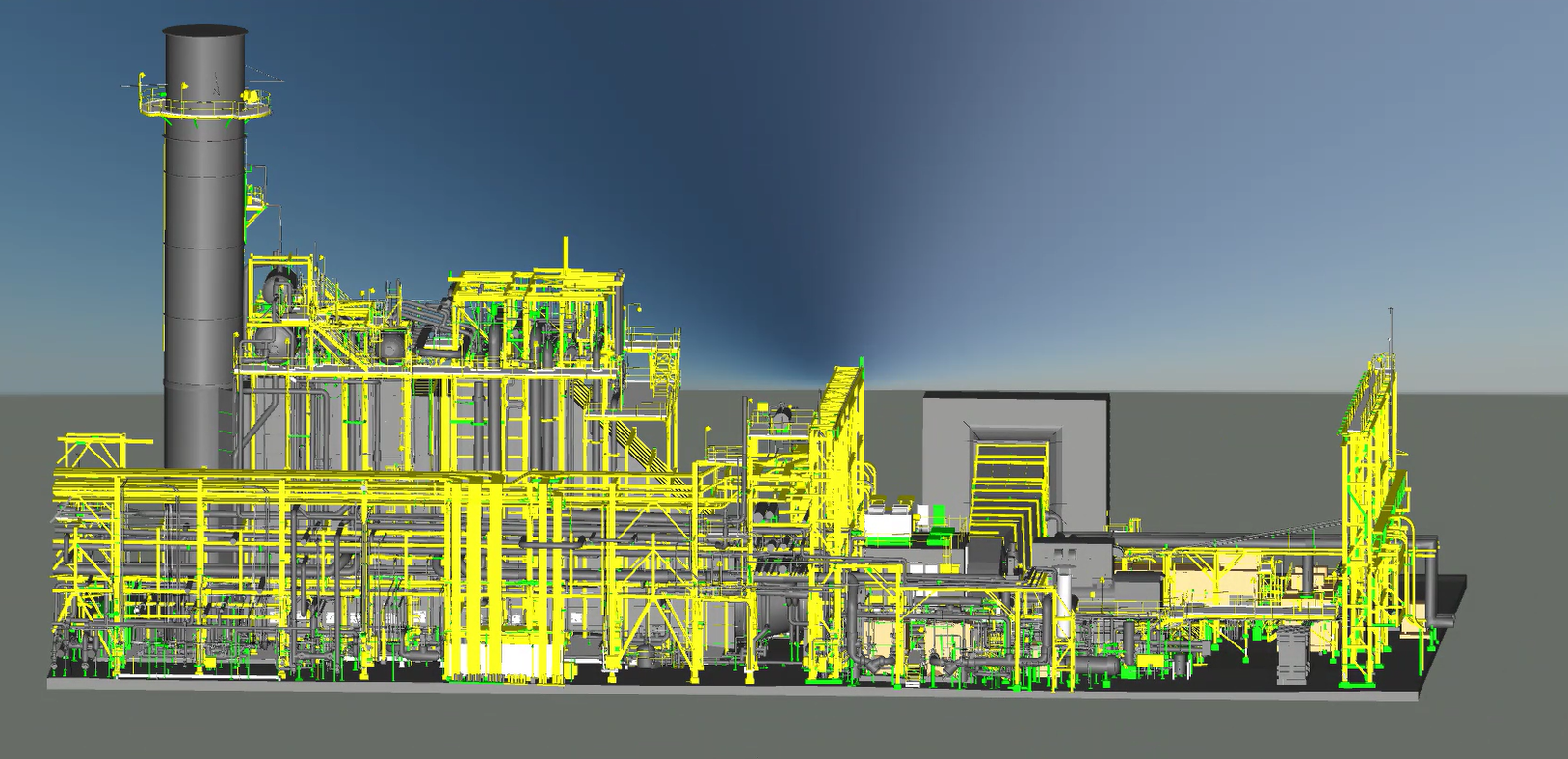
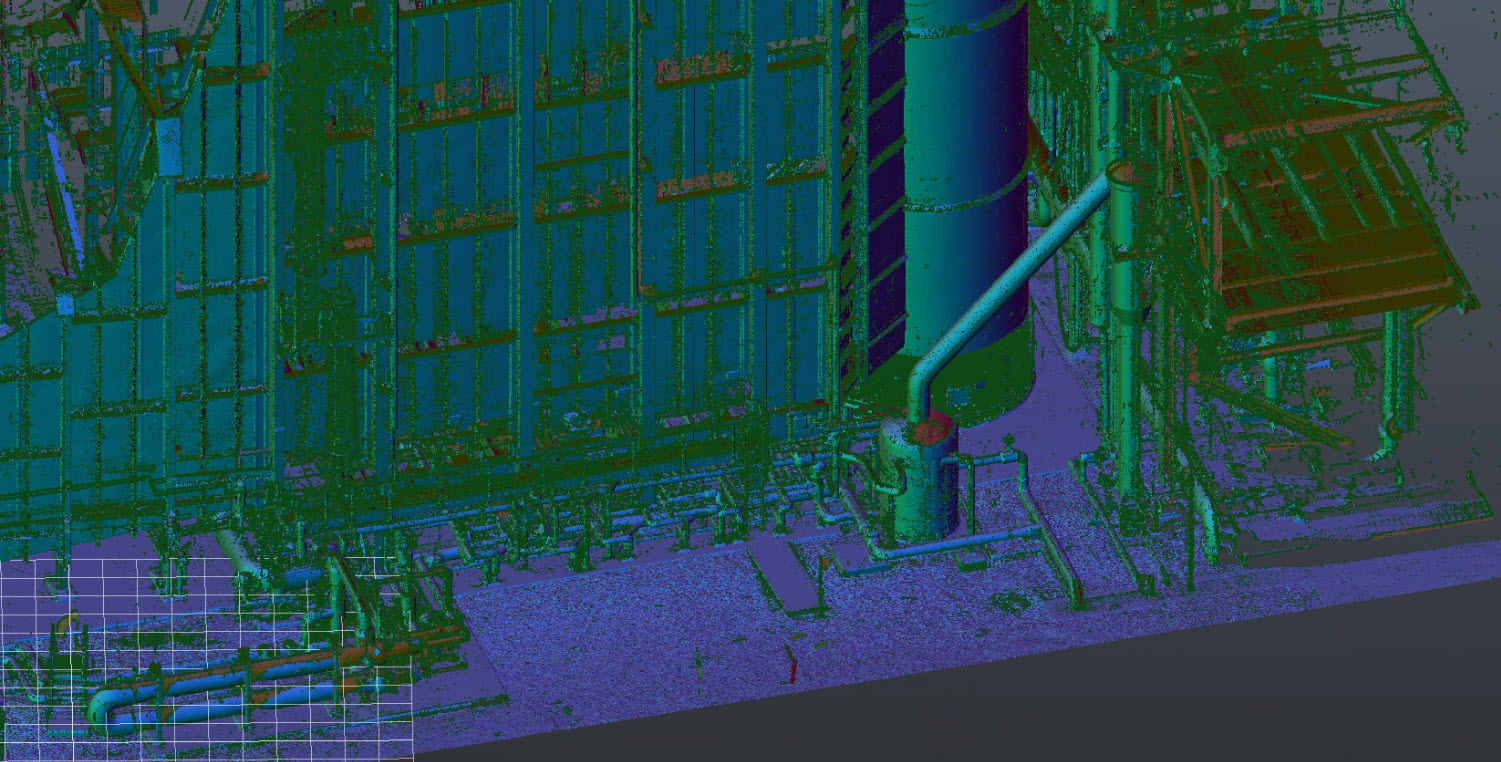
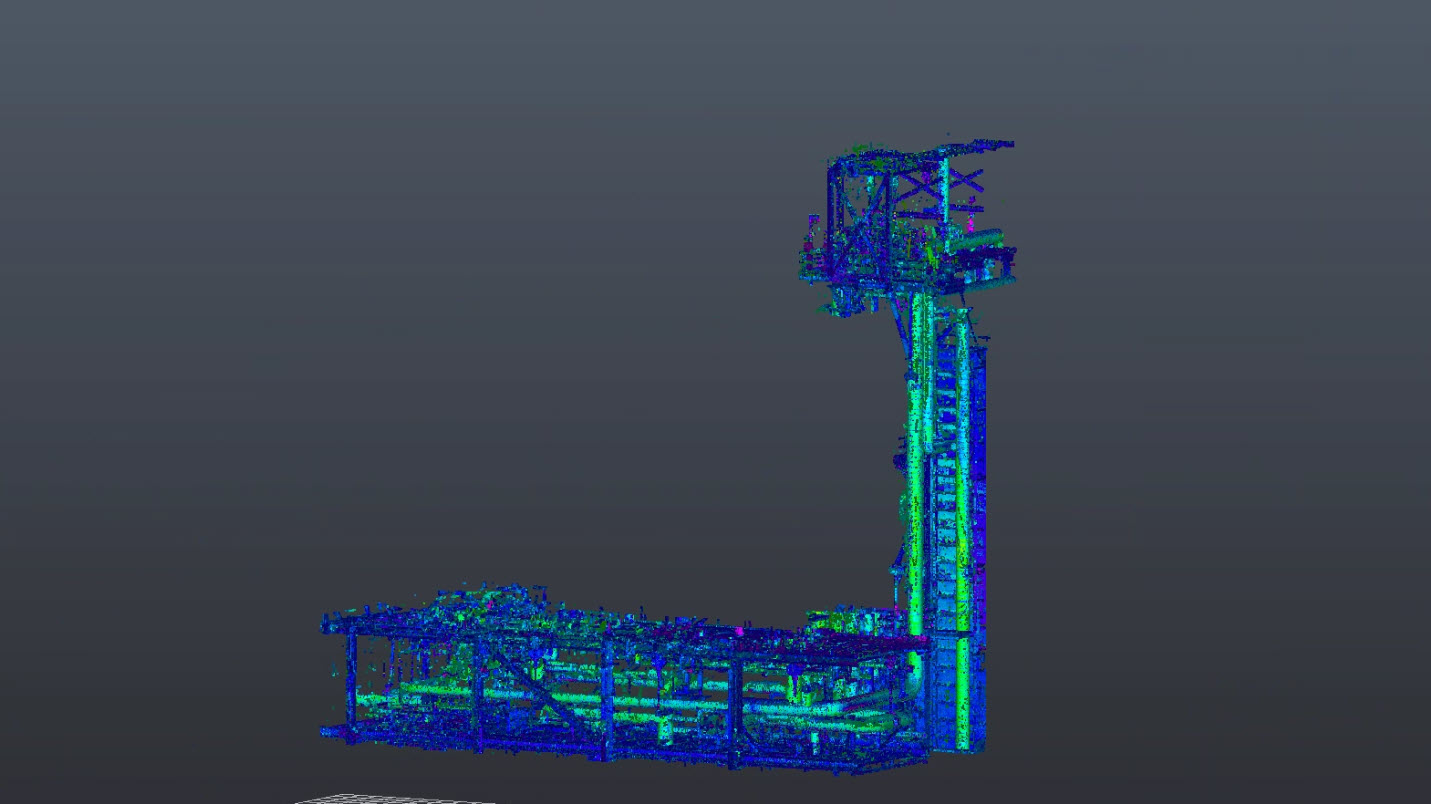
AsBuilt utilized 3D laser scanning to capture the full piping configuration across all three HRSG units. Scanning was performed from the top of each HRSG down through every operating level, extending to the pipe rack containing the shared HRH line.
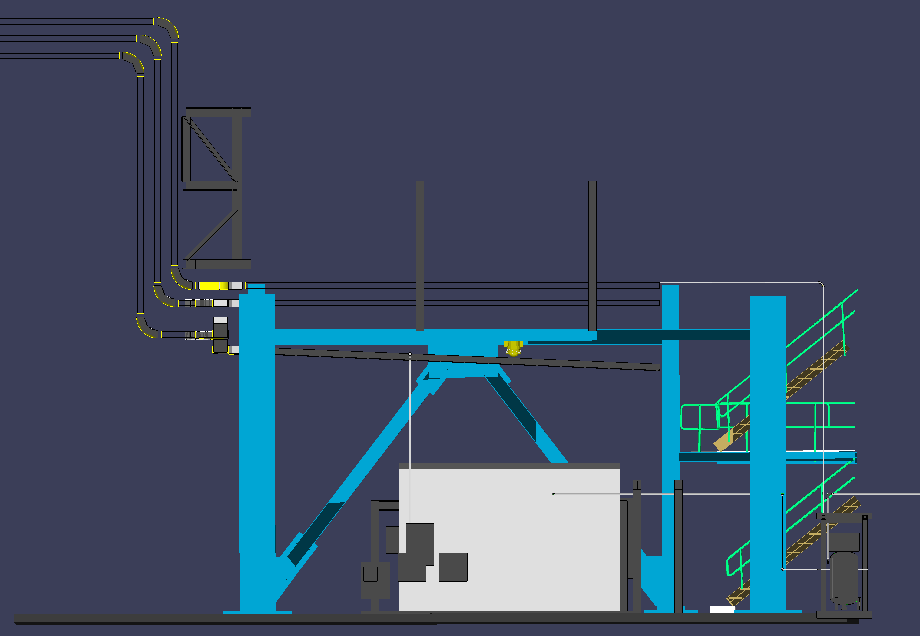
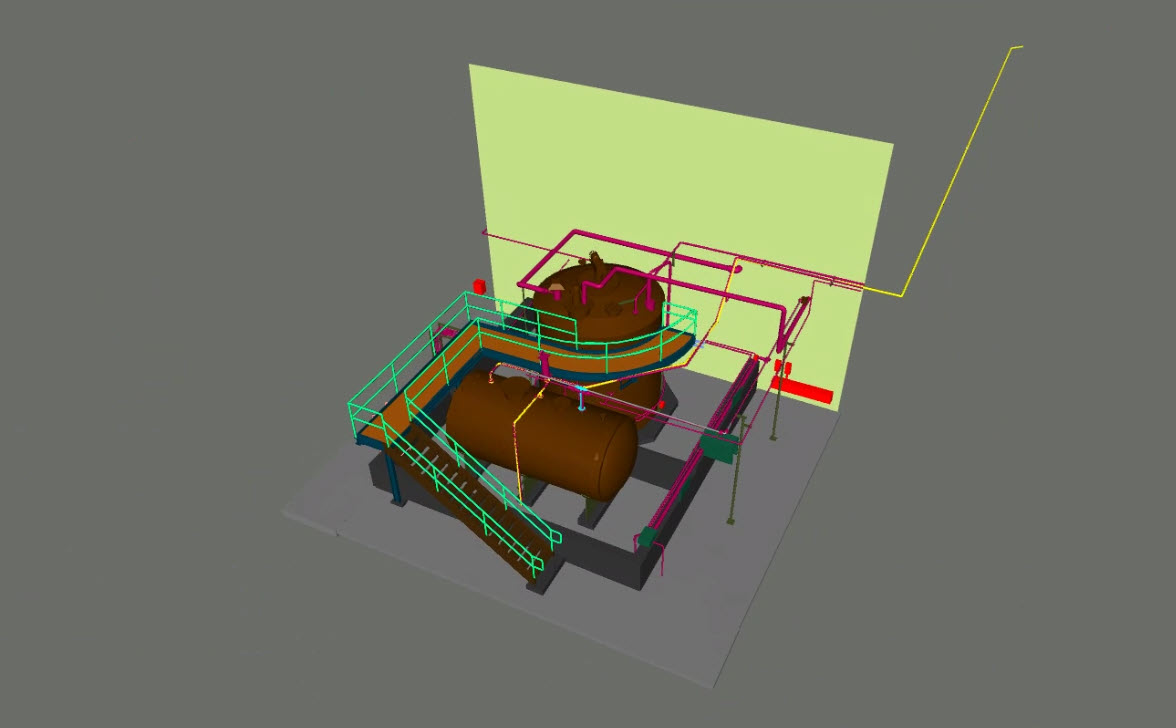
The resulting scan data provided a complete, high-resolution representation of the piping system and surrounding structures. From this data, AsBuilt delivered a navigable point cloud, photorealistic 3D views, and a detailed 3D model to support engineering review, coordination, and planning.
Key Outcomes
- Comprehensive Vertical Capture
Full-height scanning ensured all piping, supports, and interfaces were documented across multiple elevations. - Multi-Unit Coordination
Capturing all three HRSG units together enabled consistent planning around shared tie-in points. - Improved Design Confidence
Engineers and planners worked from accurate as-built data rather than assumptions or incomplete drawings. - Enhanced Visualization
Photorealistic 3D views allowed stakeholders to clearly understand complex piping layouts and constraints.
Deliverables
- Raw Scan Data
- Registered 3D Point Cloud
- Photorealistic 3D Views
- 3D As-Built Model
Why It Matters
HRSG piping upgrades are complex, vertically dense, and intolerant of error. By capturing complete as-built conditions across multiple units, AsBuilt enabled safer planning, better coordination, and reduced risk for a critical power generation upgrade.